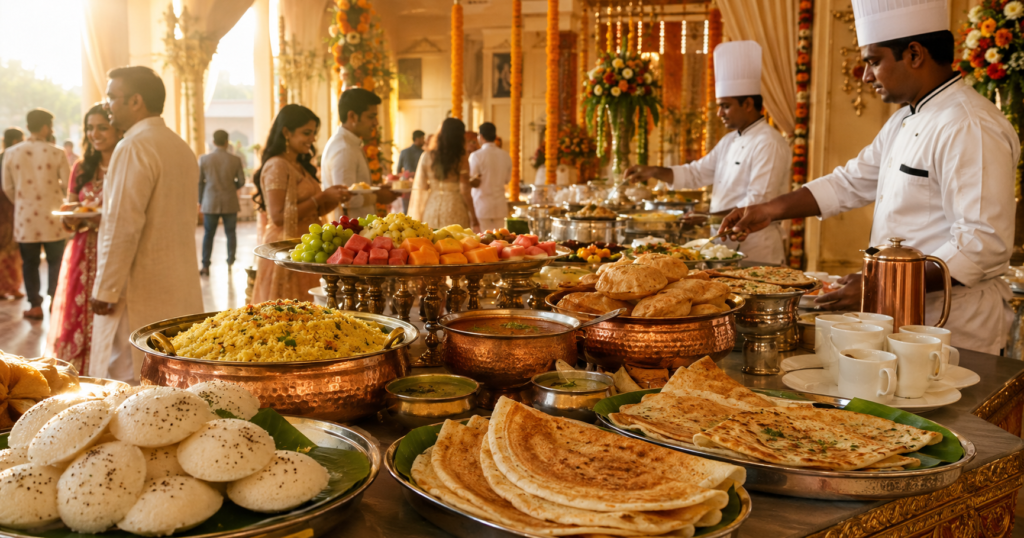
Indian weddings often begin early, and breakfast is the first real hospitality experience guests receive. A thoughtfully planned Indian wedding breakfast menu should feel festive without being too heavy, offer familiar favourites alongside a few premium choices, and remain fresh even when guests arrive at different times.
The best breakfast spread is not necessarily the longest one. It is a balanced combination of quick-service dishes, one or two live counters, hot beverages, refreshing drinks and options for children, senior citizens and guests with dietary preferences.
Quick answer: A balanced Indian wedding breakfast menu usually includes 2 beverages, 2–3 South or North Indian staples, 1 live counter, 2 light options, 2 accompaniments and 1–2 sweets. For a mixed guest list, combine a familiar dish such as poha or paratha with idli, a live dosa counter, fruit, tea, coffee and one traditional sweet.
What Makes a Good Indian Wedding Breakfast Menu?
Wedding breakfast service is different from breakfast at home or in a restaurant. A large number of people may reach the buffet together, while others arrive gradually after travelling or completing ceremonies. The menu must therefore be easy to serve, consistent in taste and safe at the correct temperature.
A strong menu normally has five qualities:
- Variety without confusion: Guests should find both filling and light choices without facing an unnecessarily crowded buffet.
- Fast service: Most items should be ready to plate in seconds, while live counters need enough equipment and chefs to prevent queues.
- Regional balance: A combination of North Indian, South Indian and locally familiar food works well for a mixed guest list.
- Freshness: Dosa, puri, paratha and tea taste best when prepared or replenished in small batches.
- Dietary inclusion: At least a few mild, low-oil, Jain-friendly or gluten-aware options should be clearly labelled after requirements are confirmed.
50+ Indian Wedding Breakfast Menu Ideas
Use the following ideas as a planning library rather than selecting every dish. The final combination should reflect the ceremony time, season, venue facilities, guest profile and overall wedding budget.
Welcome Drinks and Morning Beverages
- Masala chai
- Ginger and cardamom tea
- Filter coffee
- Freshly brewed coffee
- Kesar badam milk
- Sweet or salted lassi
- Seasonal fresh juice
- Infused water
Tea and coffee should be available from the time the first guests arrive. If the wedding is in summer, add one chilled drink such as lassi or fresh juice. During winter, warm badam milk or a second tea variation can make the welcome more comfortable.
South Indian Breakfast Favourites
- Steamed idli with sambar
- Mini idli tossed in podi
- Medu vada
- Plain dosa
- Masala dosa
- Rava dosa
- Vegetable uttapam
- Ven pongal
- Vegetable upma
- Lemon rice
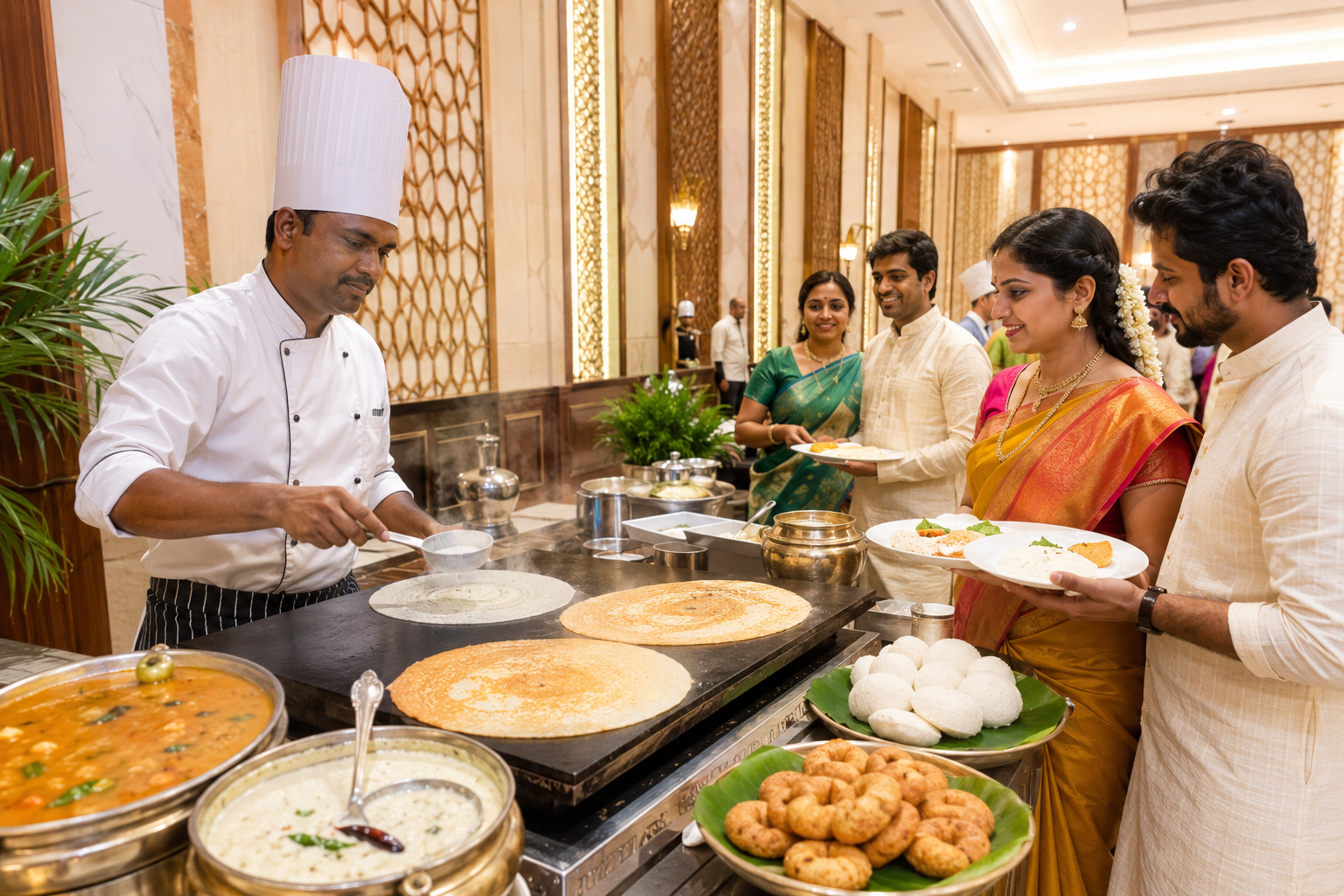
A South Indian section is popular because it can include both light and filling options. Keep ready-to-serve idli, vada and upma beside a live dosa or uttapam counter. This prevents every guest from waiting for a made-to-order dish. Coconut chutney, tomato chutney and sambar should be replenished frequently and served at safe temperatures.
North Indian Wedding Breakfast Ideas
- Aloo paratha with curd
- Paneer paratha
- Mini stuffed kulcha
- Puri with aloo sabzi
- Chole bhature
- Bedmi puri with rasedar aloo
- Moong dal kachori
- Mathri with pickle
- Vegetable poha
- Paneer or vegetable sandwich
- Chole kulche
- Sabudana khichdi
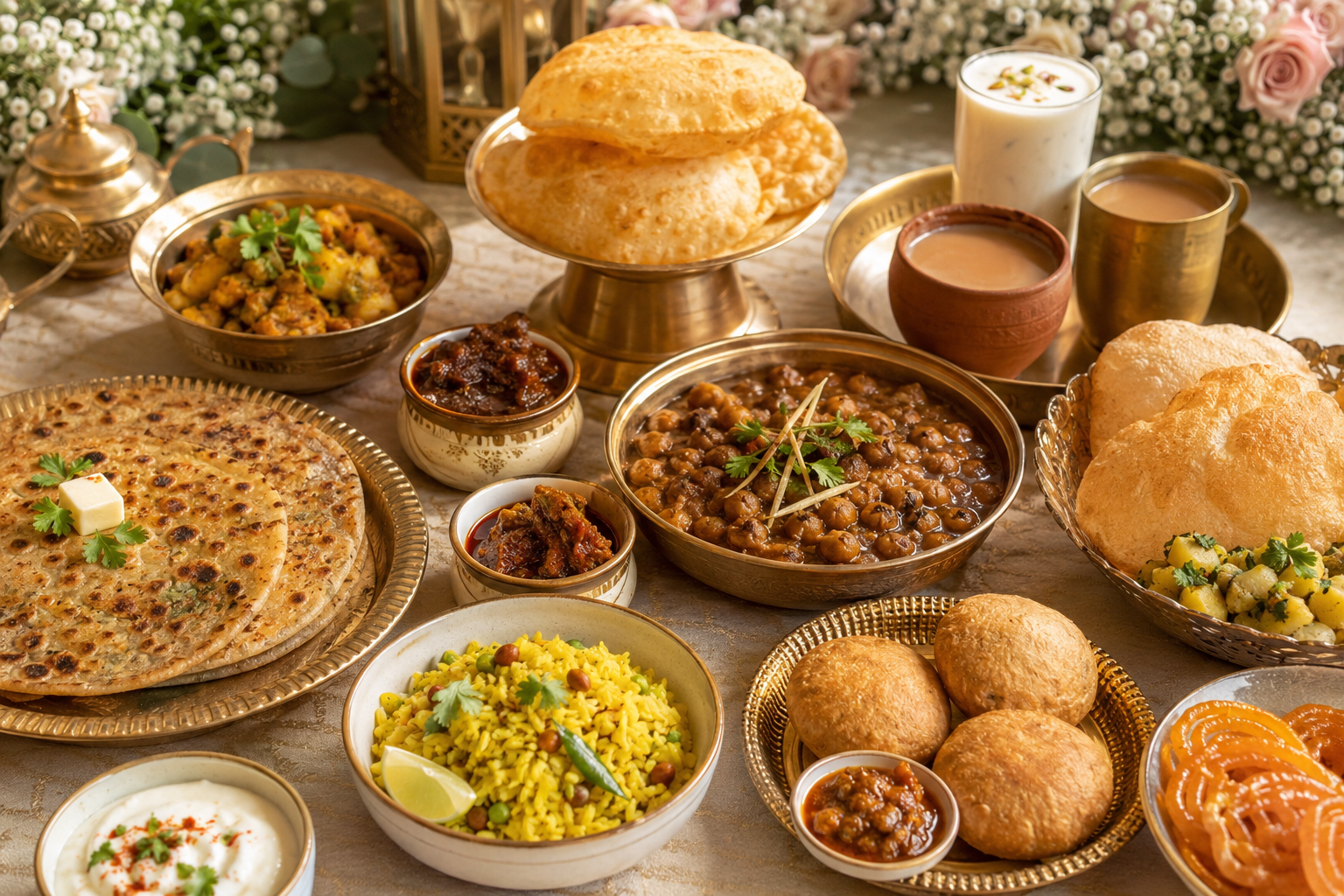
For an early-morning function, avoid placing several deep-fried and bread-heavy dishes together. One live paratha or puri option, one lighter dish such as poha, and one protein-rich accompaniment such as chole is usually enough. Mini portions help guests taste more than one item without waste.
Healthy and Light Breakfast Options
- Seasonal fruit platter
- Sprouts chaat
- Millet upma
- Moong dal chilla
- Vegetable oats
- Yoghurt with fruit and nuts
- Roasted makhana
- Boiled corn chaat
- Fresh salad cups
- Whole-wheat vegetable wraps
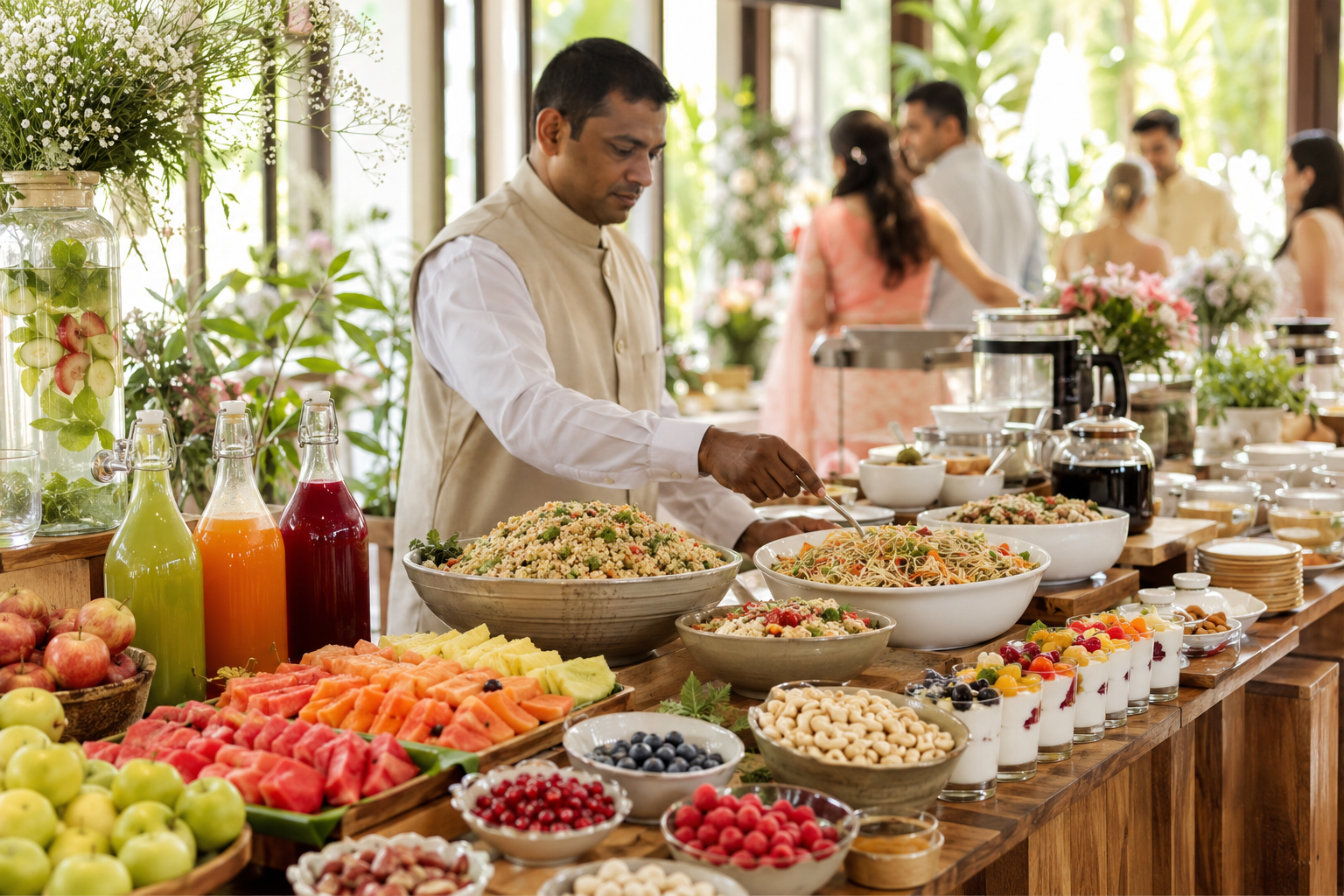
Healthy food should not look like an afterthought. Present fruit, sprouts, yoghurt and millet dishes at one attractive station with clear labels. Confirm allergies and ingredient requirements with the family before displaying claims such as gluten-free or nut-free.
Live Counter Ideas for Wedding Breakfast
- Live dosa and uttapam counter
- Paratha counter with two fillings
- Moong dal chilla counter
- Fresh sandwich and toast counter
- Chaat-style poha counter
- Tea and filter coffee bar
One well-managed live counter is usually more effective than three understaffed counters. It needs a visible queue, separate collection point, sufficient prep space and backup portions. For more planning detail, see our guide to live food counters for weddings.
Traditional Sweets and Finishing Items
- Hot jalebi
- Mini gulab jamun
- Moong dal halwa in winter
- Kesari or sheera
- Dry-fruit pinni
- Mini malpua
- Seasonal fruit cream
- Assorted mini muffins for children
Choose one traditional sweet for a standard breakfast and two for a premium spread. Hot jalebi works especially well with poha, kachori or milk, while halwa suits winter functions. Keep portions small because guests may attend another meal later the same day.
Three Sample Indian Wedding Breakfast Menus
1. Simple and Balanced Menu
- Masala chai and coffee
- Vegetable poha
- Idli, sambar and two chutneys
- Puri with aloo sabzi
- Seasonal fruit
- Hot jalebi
This combination is familiar, quick to serve and suitable for a shorter breakfast window. It provides North and South Indian choices without creating too many counters.
2. Premium Mixed-Region Menu
- Ginger tea, coffee, lassi and fresh juice
- Live dosa and uttapam counter
- Idli and medu vada
- Aloo and paneer paratha counter
- Vegetable poha
- Sprouts chaat and fruit-yoghurt station
- Jalebi and mini gulab jamun
This menu suits a larger, diverse guest list and a longer service window. It requires experienced counter staff and a layout that separates live cooking from ready-to-serve food.
3. Light Morning Ceremony Menu
- Tea, filter coffee and infused water
- Mini idli with sambar
- Moong dal chilla live counter
- Millet upma
- Seasonal fruit and yoghurt
- Kesari or dry-fruit pinni
This format works when breakfast is served before an important ceremony or when lunch follows soon afterwards.
How Many Breakfast Dishes Do You Need?
More dishes do not automatically create a better guest experience. A breakfast buffet for most Indian weddings can be planned with the following structure:
| Menu component | Recommended variety | Planning note |
|---|---|---|
| Hot beverages | 2 | Tea and coffee cover most preferences |
| Cold beverage | 1–2 | Choose according to season |
| Main breakfast dishes | 3–5 | Mix ready service and live preparation |
| Light or healthy options | 1–2 | Fruit plus one protein or grain-based item |
| Live counters | 1–2 | Add equipment and chefs as guest count rises |
| Sweets | 1–2 | Prefer mini portions |
Final quantities depend on confirmed attendance, service duration, weather, guest profile and whether another meal follows. Do not calculate every dish as though every guest will take a full portion. A professional caterer estimates the likely selection rate for each counter and keeps sensible replenishment stock.
Breakfast Planning by Season
Summer Weddings
Prioritise fresh juice, lassi, infused water, fruit, idli and lighter dishes. Keep yoghurt, cut fruit and dairy drinks properly chilled. Use covered service ware and smaller replenishment batches to maintain freshness.
Winter Weddings
Guests usually appreciate hot tea, coffee, badam milk, paratha, puri, kachori and halwa. Place beverage stations near the arrival area, but keep queues away from the main entrance.
Monsoon Weddings
Hot, freshly prepared food is attractive in the monsoon, but service hygiene becomes especially important. Protect live counters from wind and rain, keep floors dry, and avoid leaving chutneys, fruit or fried snacks exposed.
Jain, Kids and Senior-Citizen Friendly Choices
If Jain meals are required, confirm the family’s exact restrictions in writing instead of assuming that removing onion and garlic is sufficient. Ingredients, preparation surfaces, utensils, storage and serving labels may all need separate control. Our detailed Jain wedding menu guide explains this planning process.
For children, include mild idli, mini sandwiches, fruit, yoghurt and small parathas. For senior citizens, soft idli, upma, poha, fruit and mild moong dal chilla are easier options. Keep spice levels moderate and allow chutneys or pickles to provide extra heat separately.
Buffet Layout and Service Tips
- Place beverages separately: Tea and coffee queues should not block food counters.
- Start with plates and light food: Arrange the buffet in a natural order from lighter dishes to heavier items and sweets.
- Use duplicate service points: For a large guest list, duplicate popular ready-to-serve dishes instead of adding more varieties.
- Label important dishes: Mention Jain, contains nuts, dairy and spicy items only after ingredients have been verified.
- Replenish in small batches: This keeps puri, vada, paratha and fried items crisp.
- Assign counter supervisors: One person should monitor queues, cleanliness and refills throughout service.
Common Wedding Breakfast Mistakes
- Choosing too many heavy fried dishes for an early ceremony
- Opening several live counters without enough chefs or equipment
- Underestimating tea and coffee demand
- Serving large portions that increase plate waste
- Mixing vegetarian, Jain or allergy-sensitive service utensils
- Keeping food ready too early instead of planning batch preparation
- Ignoring travel delays and the actual guest-arrival pattern
Final Indian Wedding Breakfast Checklist
- Confirm guest count and breakfast service time
- Check whether lunch follows within a few hours
- Select dishes according to season and venue facilities
- Confirm dietary rules and allergies in writing
- Balance North Indian, South Indian and light choices
- Limit live counters to what the team can serve quickly
- Plan beverage stations and queue space separately
- Approve presentation, labels and replenishment schedule
- Keep a reasonable service buffer for late arrivals
Plan Your Wedding Breakfast with Blurry Curry Catering
The right breakfast menu depends on much more than a list of dishes. Blurry Curry Catering can help you plan a practical combination around your guest profile, venue, ceremony schedule, dietary requirements and preferred style of service.
For a customised menu and quotation, contact Blurry Curry Catering or call +91 95485 02855. Share your date, venue, expected guest count and preferred breakfast style so the team can recommend a suitable plan.
Frequently Asked Questions
What is the best Indian wedding breakfast menu?
A good menu combines tea and coffee, one cold beverage, 3–5 main dishes, one live counter, fruit or another light choice, accompaniments and 1–2 sweets. The exact dishes should match the season, ceremony timing and guest profile.
Which breakfast dishes are most popular at Indian weddings?
Popular choices include poha, idli, dosa, medu vada, paratha, puri sabzi, chole bhature, kachori, fruit, jalebi, tea and coffee.
How many live counters are enough for a wedding breakfast?
One or two efficiently staffed counters are enough for many weddings. Larger events may need duplicate cooking stations for a popular item rather than additional varieties.
What can be served for a light wedding breakfast?
Idli, poha, millet upma, moong dal chilla, sprouts chaat, fruit, yoghurt, tea and coffee create a light but satisfying spread.
Should wedding breakfast include both North and South Indian food?
For a mixed guest list, including at least one familiar choice from each region can work well. Keep the total menu focused so service remains quick and food stays fresh.
What sweets are suitable for wedding breakfast?
Hot jalebi, mini gulab jamun, kesari, dry-fruit pinni and winter moong dal halwa are suitable options. One or two sweets in small portions are normally sufficient.
How should Jain breakfast food be arranged?
Confirm the family’s precise rules, approve every ingredient and use the required separate preparation, storage, utensils and service labels. Requirements can vary, so never rely on assumptions.
How early should breakfast service start?
Service should open according to the first guest-arrival and ceremony schedule. Tea, coffee and a few ready items can begin first, followed by full live counters at the agreed time.