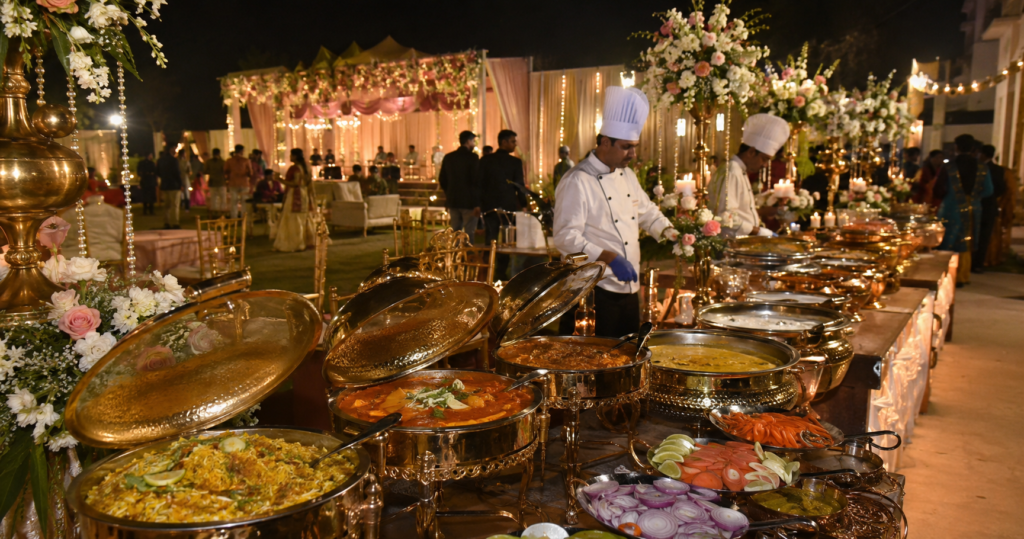
Planning a wedding menu for 150 guests requires more than choosing a long list of popular dishes. The menu must offer enough variety for different age groups and dietary preferences while remaining practical for the venue, service team and budget. Too few choices can feel ordinary, but too many similar dishes increase cost, slow down service and create food waste.
For a balanced Indian wedding, 150 guests can usually be served comfortably with 2 welcome drinks, 3–4 starters, 2 live counters, 3–4 vegetarian main-course dishes, 1–2 non-vegetarian dishes if required, dal, rice or biryani, 2–3 breads, accompaniments and 2–3 desserts.
Quick answer: A practical wedding menu for 150 guests can include 180–225 welcome-drink servings, 600–900 starter pieces across all varieties, two efficiently managed live counters, a focused Indian main course and approximately 300–375 dessert portions. These are planning ranges; the final menu and quantities should be adjusted for event timing, guest profile and service style.
Wedding Menu For 150 Guests: Quick Overview
| Menu section | Recommended variety | Planning range |
|---|---|---|
| Welcome drinks | 2 options | 180–225 servings |
| Vegetarian starters | 2–3 options | Split within total starter quantity |
| Non-vegetarian starters | 1–2 options | Based on confirmed non-vegetarian guests |
| Total starter pieces | Across all varieties | Approximately 600–900 pieces |
| Live counters | 1–2 | Duplicate popular service points if required |
| Vegetarian gravies | 2–3 | Paneer plus seasonal or specialty dishes |
| Non-vegetarian mains | 1–2 | Calculate for relevant guests only |
| Dal | 1 | Dal makhani, dal tadka or regional option |
| Rice and biryani | 1–2 | Avoid unnecessary duplication |
| Indian breads | 2–3 | Prefer live tandoor preparation |
| Desserts | 2–3 | Approximately 300–375 portions across varieties |
This overview is not a final kitchen production sheet. The catering team should confirm portion size, cooking yield, expected attendance and the popularity of each dish before finalising quantities.
What Affects A 150-Guest Wedding Menu?
Event Timing
A dinner around normal meal time generally needs a more complete menu than a mid-morning ceremony or afternoon function. If guests have already attended a heavy lunch, an evening menu can place greater emphasis on starters, live counters and a focused main course.
Guest Profile
Children, senior citizens and young adults consume different types and quantities of food. A mixed family gathering benefits from familiar Indian dishes, mild choices and a few modern counters. Record vegetarian, non-vegetarian, Jain and other dietary requirements separately.
Service Style
A self-service buffet needs sensible replenishment stock because guests may take second helpings. A plated meal provides better portion control but needs more coordinated staffing. Passed starters require enough service personnel so every part of the venue is covered.
Number Of Dishes
When several starters, counters and gravies are available, consumption of each individual dish decreases. Do not prepare a full portion of every selected dish for all 150 guests.
Venue And Weather
Outdoor weddings in Dehradun may need covered counters, additional beverage capacity or warming arrangements depending on the season. Venue power, water, kitchen space and distance from the service area also affect the final menu.
Welcome Drinks For 150 Guests
For 150 guests, approximately 180–225 welcome-drink servings provide a practical starting range. The extra servings cover second requests, warmer weather and small attendance changes.
Suggested combinations:
- Summer: aam panna and mint lemonade
- Winter: masala chai or soup with one mocktail
- Premium evening: one fruit-based mocktail and one traditional cooler
- Day wedding: chaas, jaljeera or seasonal juice
Keep drinking water continuously available. Avoid selecting two drinks that are both very sweet or dairy-heavy. A refreshing low-sugar option improves the overall balance.
Starter Menu For 150 Guests
If dinner follows, four to six starter pieces per guest across all varieties may be a useful planning range. This equals approximately 600–900 pieces in total, not 600–900 pieces of every starter.
Vegetarian Starters
- Paneer tikka
- Hara bhara kebab
- Dahi ke kebab
- Tandoori mushroom
- Vegetable spring roll
- Crispy corn
Non-Vegetarian Starters
- Chicken tikka
- Murg malai tikka
- Fish tikka
- Seekh kebab
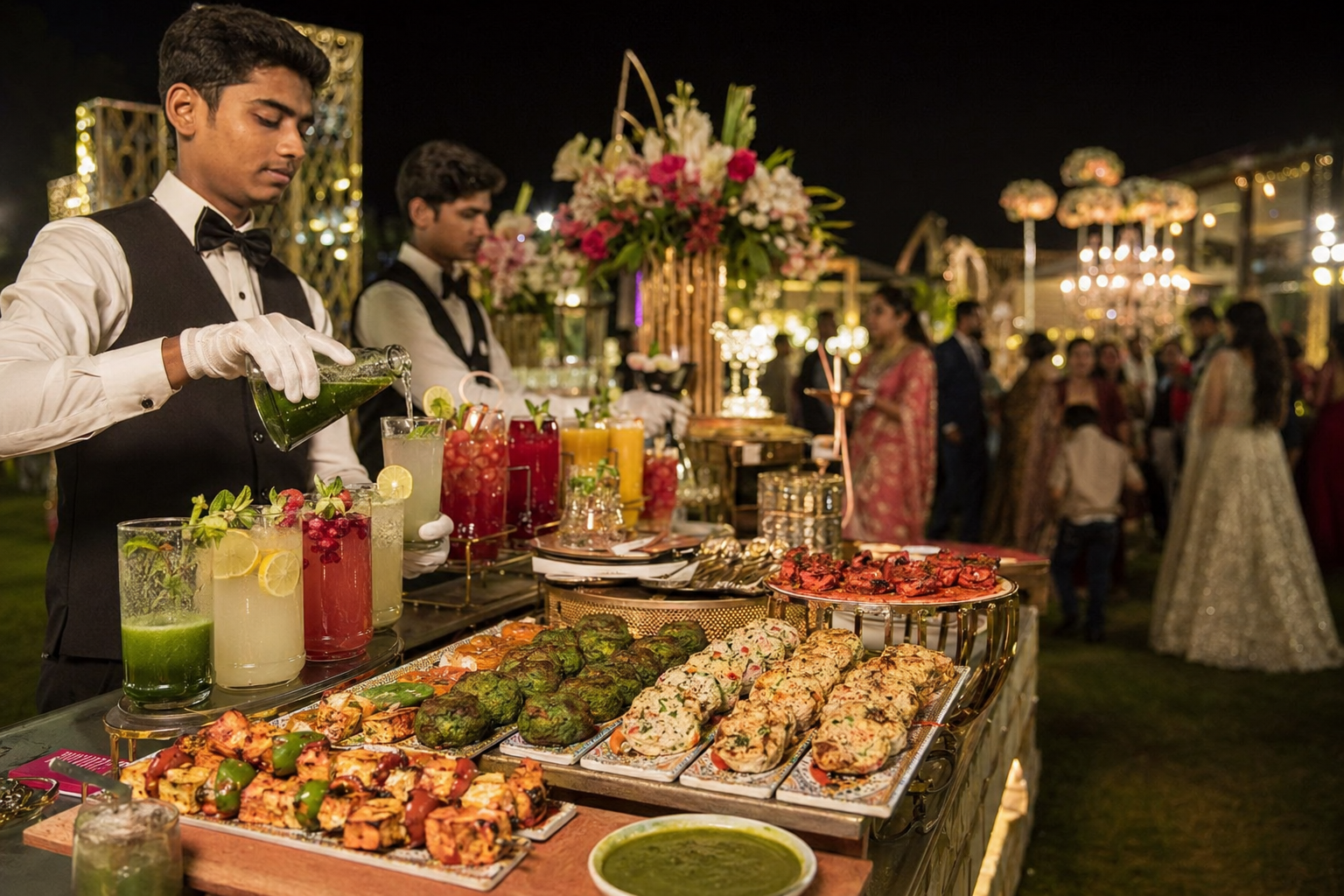
A balanced combination could use paneer tikka, hara bhara kebab, one crisp or fried option and one non-vegetarian starter if required. The quantity of non-vegetarian food should be calculated according to confirmed consumers, not the complete guest count.
Passed snacks and live counters should be planned together. If a popular chaat or tandoor counter is open throughout the event, consumption of tray-served starters may reduce.
Best Live Counters For A 150-Guest Wedding
One or two well-staffed live food counters are enough for many 150-guest weddings. Three counters can work for a longer premium event, but only when the venue has sufficient space, chefs, equipment and queue management.
Popular options include:
- Golgappa and chaat
- Live tandoor and kebabs
- Dosa and uttapam
- Pasta station
- Asian wok counter
- Live jalebi and rabri
For a practical combination, choose one familiar Indian counter and one experience-led counter. Golgappa with live tandoor, or chaat with pasta, offers contrast without overcrowding the venue.
Complete Vegetarian Wedding Menu For 150 Guests
Welcome Drinks
- Aam panna
- Fresh lime and mint cooler
Starters
- Paneer tikka
- Hara bhara kebab
- Dahi ke kebab
- Crispy corn
Live Counters
- Golgappa and papdi chaat
- Live tandoor counter
Main Course
- Paneer lababdar
- Malai kofta
- Seasonal mixed vegetables
- Dal makhani
- Vegetable pulao or biryani
- Butter naan, tandoori roti and lachha paratha
Accompaniments
- Mixed raita
- Fresh green salad
- Green chutney
- Pickle and papad
Desserts
- Gulab jamun
- Rasmalai
- Live jalebi with rabri or kulfi
This menu has enough variety to feel celebratory while keeping the kitchen and buffet manageable. Paneer is normally more popular than a seasonal vegetable, so every gravy should not be prepared in equal quantity.
Veg And Non-Veg Wedding Menu For 150 Guests
When both preferences are served, first estimate the actual split. For example, if approximately 90 guests are expected to eat non-vegetarian food, the chicken, mutton or fish plan should be prepared for those guests with a sensible buffer—not all 150 attendees.
Welcome Drinks
- Seasonal fruit cooler
- Jaljeera or mint lemonade
Vegetarian Starters
- Paneer tikka
- Hara bhara kebab
Non-Vegetarian Starters
- Chicken tikka
- Fish tikka or murg malai tikka
Live Counters
- Chaat counter
- Live tandoor counter
Vegetarian Main Course
- Paneer lababdar
- Seasonal mixed vegetables
- Dal makhani
Non-Vegetarian Main Course
- Butter chicken or chicken curry
- Mutton rogan josh, if required
Rice And Breads
- Vegetable pulao
- Chicken biryani according to relevant guests
- Butter naan, tandoori roti and lachha paratha
Desserts
- Gulab jamun
- Rasmalai
- Kulfi or live jalebi
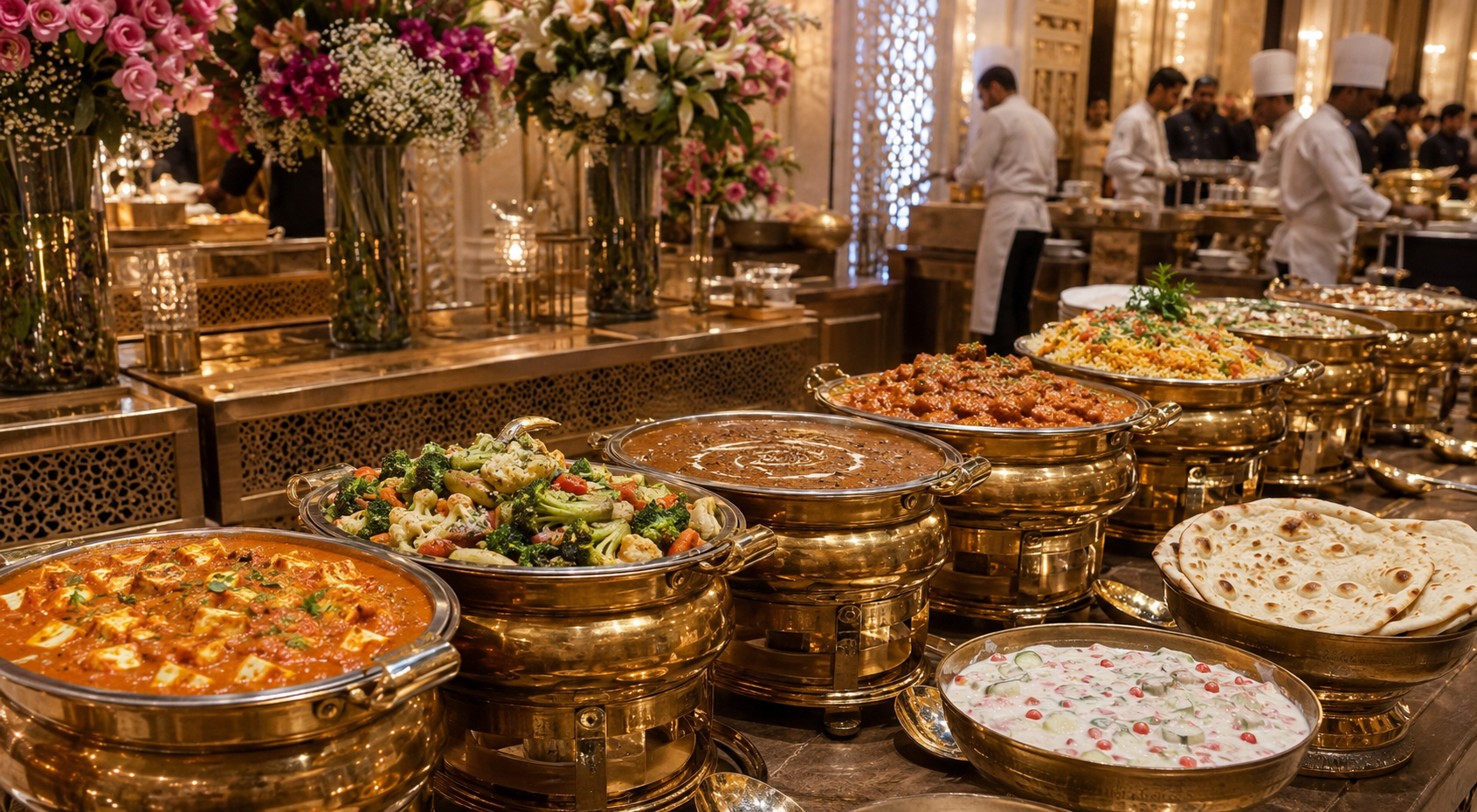
Use separate service utensils and clearly marked counters for vegetarian and non-vegetarian food. If the family requires physical separation in preparation or service, confirm it during menu approval rather than assuming the buffet layout will be sufficient.
How Much Main-Course Food Is Needed?
The exact production quantity depends on the selected recipes and cooking yield. For initial menu planning, the combined quantity of paneer and vegetable gravies may fall around 12–17 kg of prepared food, while prepared dal may fall around 8–11 kg. These are broad planning estimates and must not replace the caterer's production calculations.
An example vegetarian split could be:
- Paneer gravy: approximately 5–7 kg prepared
- Seasonal vegetable: approximately 4–6 kg prepared
- Kofta or second specialty dish: approximately 3–5 kg prepared
- Dal: approximately 8–11 kg prepared
Popularity is not equal across dishes. Paneer, dal and familiar comfort foods often require more replenishment than a specialised vegetable preparation.
Rice, Biryani And Bread Planning
When rice is served with several starters, breads and gravies, approximately 19–27 kg of cooked rice or biryani may be a reasonable starting range for 150 guests. The raw-rice requirement will be lower and depends on the variety and cooking method.
Approximately 300–450 Indian breads may be planned depending on their size and whether rice is also served. A suggested service mix could include:
- Butter naan
- Tandoori roti
- Lachha paratha or missi roti
Fresh live-tandoor production is preferable to preparing all breads in advance. It improves quality and allows the team to respond to actual demand.
Salad, Raita And Accompaniments
A starting plan for 150 guests may include:
- Prepared raita: approximately 8–11 kg
- Fresh salad: approximately 8–11 kg
- Papad: approximately 150–190 portions
- Pickle and chutney in smaller refillable containers
Serve salad and raita in smaller batches so they remain fresh and are not exposed for the entire event.
Dessert Menu And Quantity
Approximately 300–375 dessert portions can be divided between two or three choices. This range overlaps because not every guest will eat a complete serving of every dessert.
Example split:
- Gulab jamun: 150–175 pieces
- Rasmalai: 110–150 portions
- Kulfi or live jalebi: 75–110 portions
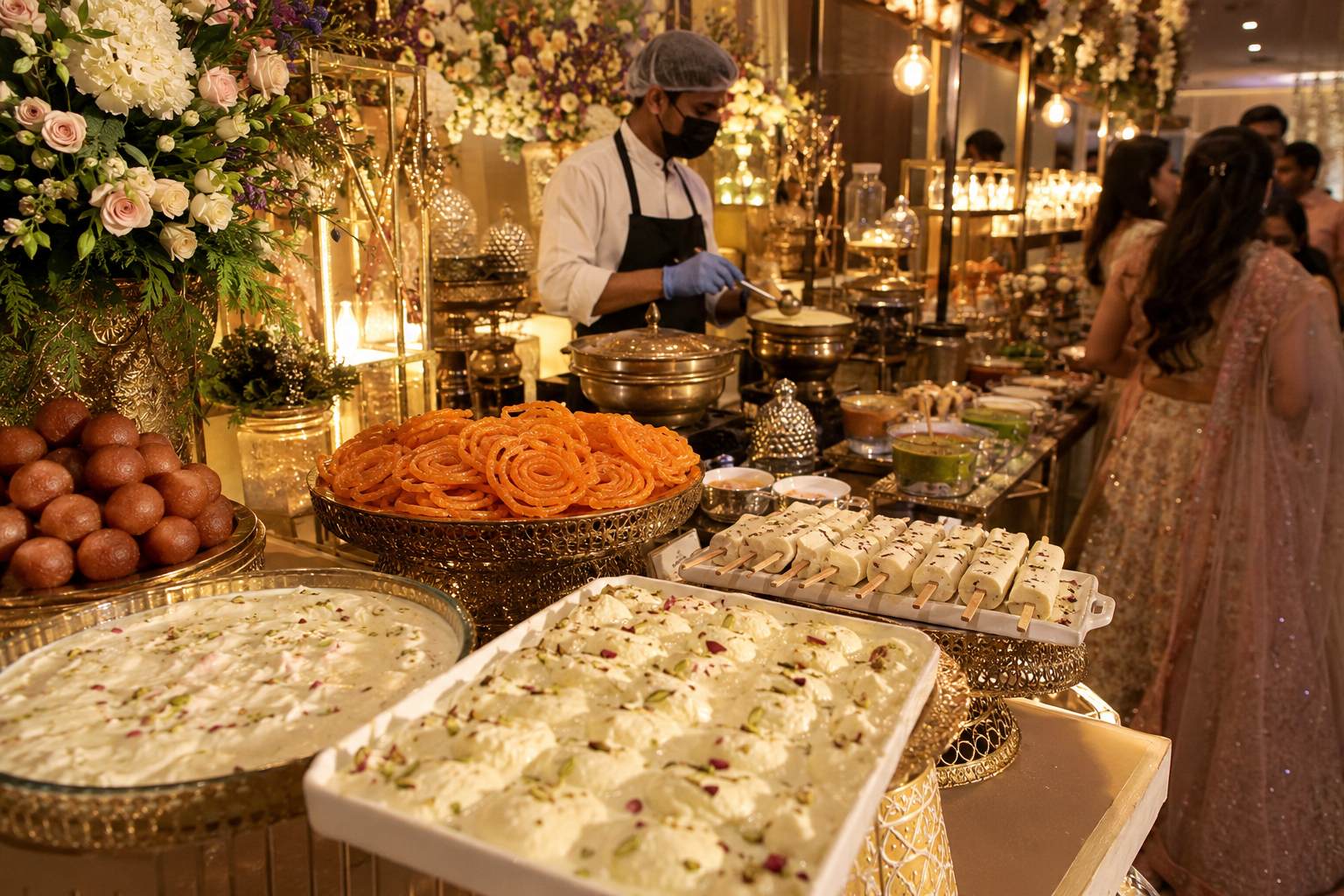
For winter weddings, hot jalebi, gulab jamun or halwa work well. Summer weddings benefit from kulfi, ice cream, phirni or fruit-based desserts. Keep chilled dairy desserts at safe temperatures and replenish outdoor counters in small batches.
Budget-Friendly Menu For 150 Guests
A shorter menu can still feel premium when dishes are well selected and presented.
- Two welcome drinks
- Three vegetarian starters
- One live chaat counter
- Paneer gravy and seasonal vegetable
- Dal makhani
- Vegetable pulao
- Two Indian breads
- Raita, salad and accompaniments
- Two desserts
Cost is influenced by ingredient quality, non-vegetarian selection, live counters, service staff, crockery, presentation, venue logistics and event duration. Request an itemised quotation rather than comparing only per-plate headlines.
How Much Extra Food Should Be Kept?
A moderate buffer may be useful when attendance is uncertain, but preparing 20–30% extra of every dish can create major waste. Consider:
- Reliability of the confirmed guest count
- Whether unexpected attendees are likely
- Buffet or plated service
- Popularity of individual dishes
- Duration of service
- Availability of backup ingredients at the venue
Experienced caterers often keep selected backup ingredients ready instead of displaying excessive prepared food from the start.
Common Menu-Planning Mistakes
- Selecting too many similar paneer or cream-based gravies
- Preparing every dish for all 150 guests
- Calculating non-vegetarian food for vegetarian guests
- Opening multiple live counters without enough chefs
- Ignoring children, senior guests and Jain requirements
- Treating raw and cooked food weights as identical
- Preparing all breads before service begins
- Choosing desserts without considering season and storage
- Finalising quantities before confirming the menu
- Comparing caterers only by the lowest per-plate price
Jain, Kids And Senior-Friendly Options
Confirm Jain requirements in writing after reviewing our Jain wedding menu guide because preferences can differ between families. Ingredients, preparation surfaces, storage, utensils and service labels may all require separate planning.
For children, include mild paneer tikka, mini sandwiches, pasta, fruit and small dessert portions. Senior guests may prefer soft breads, dal, mild vegetables, curd rice, fruit and less oily starters. Extra spice can be offered through chutneys instead of making every dish hot.
Final Checklist For A 150-Guest Wedding
- Confirm the realistic attendance count
- Record vegetarian, non-vegetarian and Jain guests separately
- Match menu size to event duration
- Check venue kitchen, power and water facilities
- Select no more live counters than the team can manage
- Plan beverages according to season
- Approve portion sizes and replenishment strategy
- Confirm vegetarian and non-vegetarian separation
- Review service staff and buffet layout
- Keep a practical backup plan for late arrivals
Plan Your 150-Guest Wedding With Blurry Curry
A strong wedding menu combines guest comfort, appropriate variety, fresh preparation and efficient service. Blurry Curry Catering can help customise a menu around your wedding date, venue, guest profile, preferred cuisines, dietary requirements and budget.
For a customised menu and quotation, contact Blurry Curry Catering or call +91 95485 02855. Couples planning a celebration in Dehradun can also explore our wedding catering services in Dehradun.
Frequently Asked Questions
What is a good wedding menu for 150 guests?
A balanced menu can include two drinks, three to four starters, one or two live counters, paneer, vegetables, dal, rice or biryani, breads, accompaniments and two to three desserts. Add non-vegetarian dishes according to confirmed demand.
How many starter pieces are required for 150 guests?
If a complete meal follows, approximately 600–900 starter pieces across all selected varieties may be a useful planning range. Piece size, event duration and live counters affect final consumption.
How many live counters are enough for 150 guests?
One or two well-managed counters are enough for many weddings. Premium events may use a third counter if the venue and service team can manage it without queues.
How much cooked rice is required for 150 guests?
Approximately 19–27 kg of cooked rice or biryani may be considered when breads, starters and several gravies are also served. Raw-rice quantities depend on cooking yield.
How many rotis or naans are needed for 150 guests?
Approximately 300–450 breads may be planned depending on bread size, guest preferences and rice availability. Live preparation helps control freshness and quantity.
How many desserts should be prepared for 150 people?
Approximately 300–375 portions can be divided between two or three desserts. The final split should reflect serving size, popularity and season.
Should non-vegetarian dishes be calculated for all 150 guests?
No. Calculate them according to the expected non-vegetarian guest count with an appropriate buffer. Provide suitable vegetarian alternatives separately.
How much extra food should be kept for a wedding?
Use a moderate buffer based on attendance certainty, service style and backup cooking ability. Avoid preparing a large extra percentage of every selected dish.
Can this menu be customised for a daytime wedding?
Yes. A daytime menu can use lighter drinks, grilled starters, fewer rich gravies, fresh fruit and cooling desserts. Weather and the timing of other wedding functions should guide the final choices.