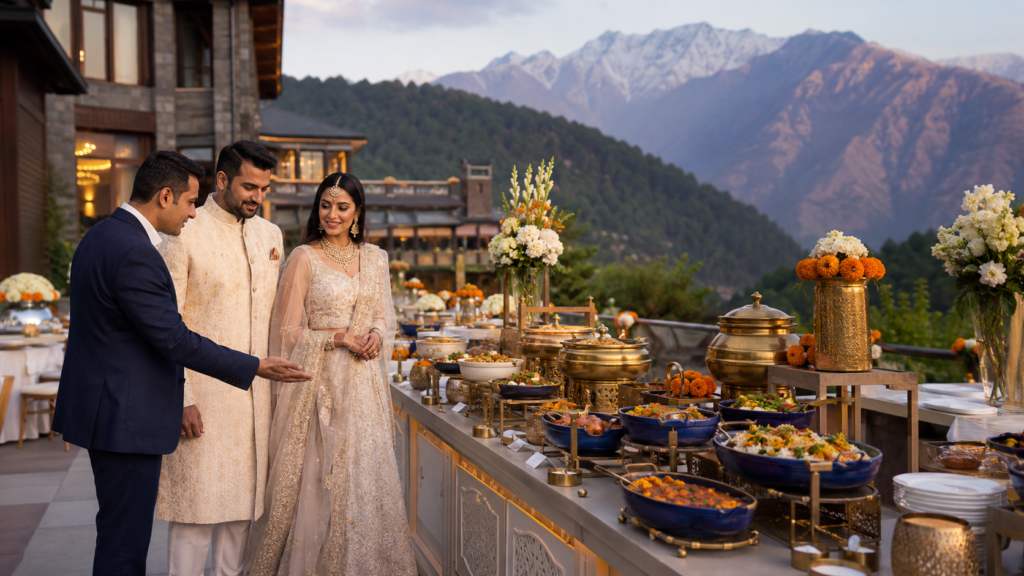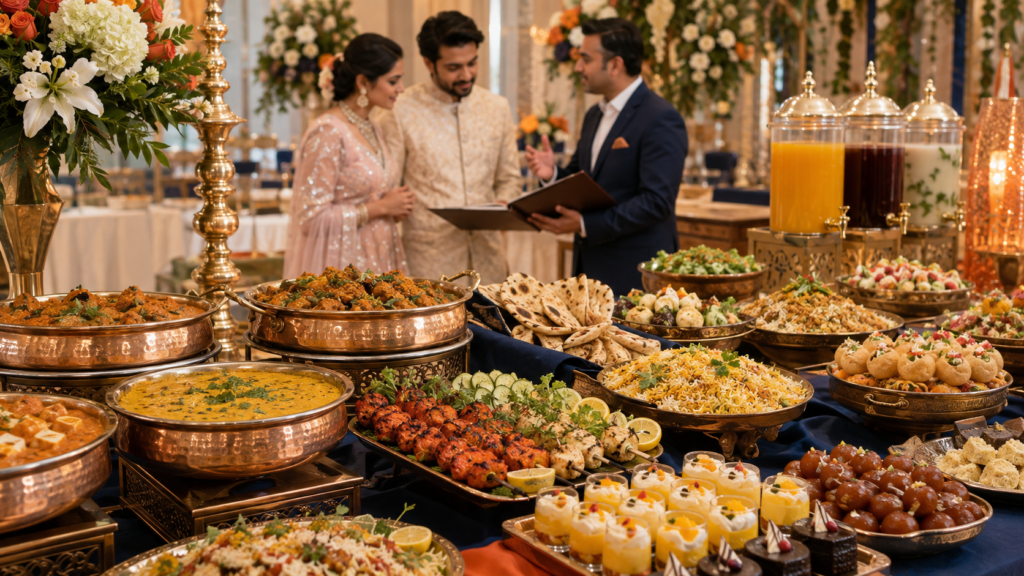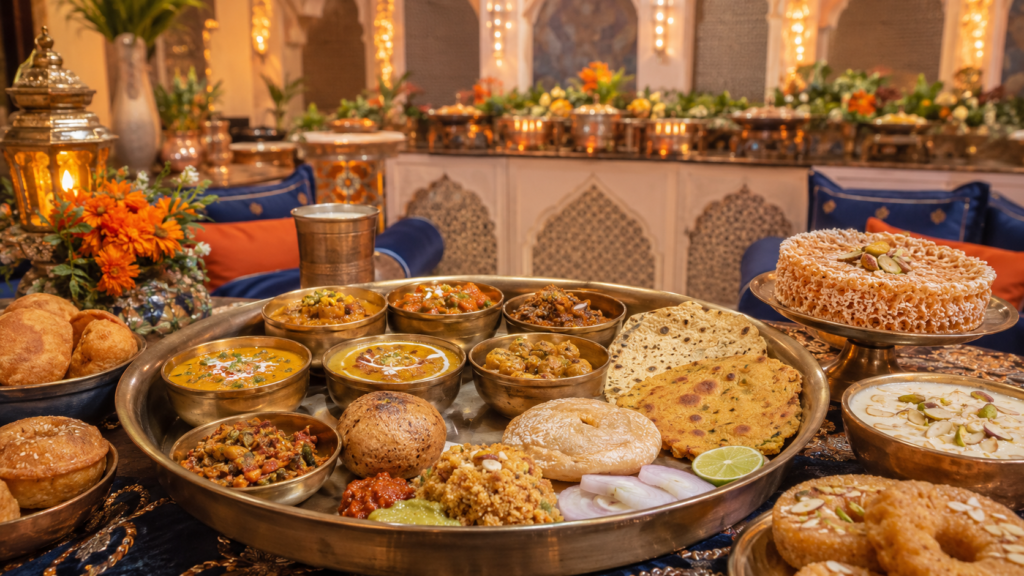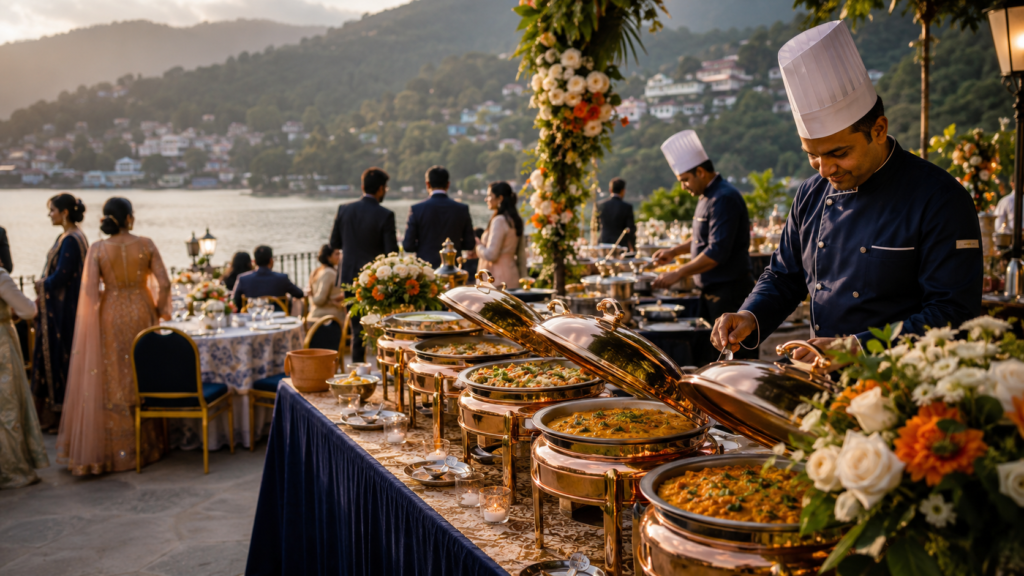
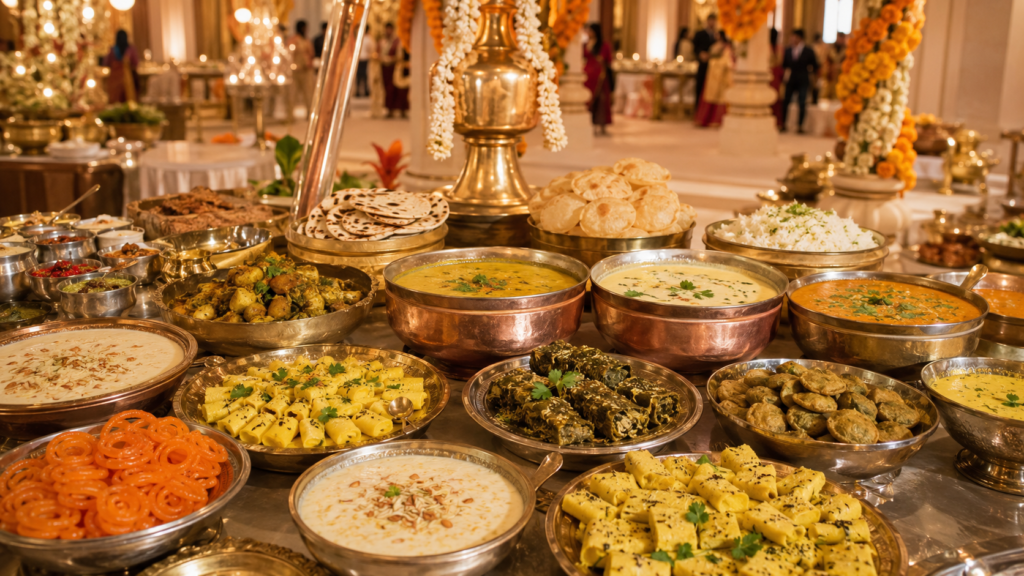
A thoughtfully planned Gujarati wedding food menu brings together warm hospitality, regional flavours and an impressive variety of vegetarian dishes. From delicate farsan and fresh live counters to comforting dal-kadhi, seasonal shaak and traditional mithai, Gujarati wedding food can feel festive without becoming unnecessarily heavy.
The best menu is not simply the longest list of dishes. It should match the wedding function, season, guest profile, venue facilities and service time. This guide includes more than 100 food ideas, practical combinations and ready-to-use breakfast, lunch and dinner menus to help families create a balanced celebration.
Quick answer: A balanced Gujarati wedding menu can include 2–3 welcome drinks, 5–7 farsan or starters, 2–4 live counters, 6–8 main-course dishes, 2 rice preparations, 3–4 breads, accompaniments and 3–5 desserts. Select authentic favourites, but avoid repeating the same sweet, fried or paneer-heavy flavours in every section.
What Makes a Gujarati Wedding Food Menu Special?
Gujarati cuisine is known for its contrast of flavours and textures. A single meal may include sweet, tangy, spicy, savoury, soft and crisp elements. Wedding menus expand this tradition with regional dishes, festive farsan, live preparation and elegant presentation.
Although many Gujarati celebrations prefer a completely vegetarian spread, requirements differ between families. Some may request Jain food, Swaminarayan preparations, no onion and garlic, or separate service for specific dietary needs. These details should be confirmed before finalising ingredients and kitchen arrangements.
- Variety: Farsan, shaak, dal, kadhi, rice, breads, chutneys and sweets create several distinct flavours.
- Seasonal cooking: Undhiyu, aamras and fresh winter vegetables are best included only when their ingredients are naturally suitable.
- Regional identity: Surti, Kathiyawadi and traditional Gujarati favourites can personalise the meal.
- Guest-friendly food: Familiar dishes can be balanced with lighter preparations for children and senior guests.
- Generous hospitality: Attentive replenishment and warm service matter as much as the number of dishes.
How to Plan the Right Gujarati Wedding Menu
Begin with the event rather than the dish list. A morning wedding needs a different flow from a late-evening reception. Similarly, an intimate home function does not require the same number of counters as a 500-guest destination celebration.
Consider the wedding function
Breakfast should be fresh and easy to digest. A daytime wedding lunch can highlight a complete Gujarati meal, while an evening reception can support passed starters, live counters and a broader dessert section. Mehendi and Garba events benefit from small plates that guests can enjoy while moving around.
Know the guest profile
Ask whether most guests prefer traditional Gujarati food or a multi-cuisine menu. Include mild options for children and older guests. If visitors are arriving from different regions, retain a strong Gujarati core while adding a few widely familiar North Indian or continental choices.
Balance the cooking methods
Do not make every snack deep-fried or every main dish rich and creamy. Combine steamed farsan, grilled starters, one fried favourite, fresh salads, lighter shaak and a carefully selected rich dish. This gives guests variety without making the meal feel exhausting.
Match the menu to the season
Summer celebrations work well with chaas, kokum, aam panna, fresh fruit, lighter curries and chilled desserts. Winter weddings can feature undhiyu, lilva kachori, bajra rotla, warm halwa, jalebi and hot beverages. Monsoon menus require particularly careful frying, transport and food-temperature management.
Gujarati Wedding Welcome Drinks
Welcome drinks create the first food-service impression. Two or three well-executed beverages are usually better than a large selection that is difficult to chill and serve consistently. Choose one traditional option, one universally familiar cooler and sufficient drinking water.
Traditional and refreshing drinks
- Masala chaas
- Sweet or salted lassi
- Kokum sharbat
- Kairi panna
- Jaljeera
- Nimbu pudina shikanji
- Variyali sharbat
- Rose sharbat
- Kesar badam milk
- Thandai
- Fresh coconut water
- Watermelon and mint cooler
- Cucumber lemon cooler
- Guava chilli cooler
- Seasonal fresh-fruit juice
For a daytime summer wedding, masala chaas and kokum sharbat make a refreshing pair. For a premium winter reception, consider kesar badam milk alongside a lighter citrus or mint beverage.
Gujarati Farsan and Starter Ideas
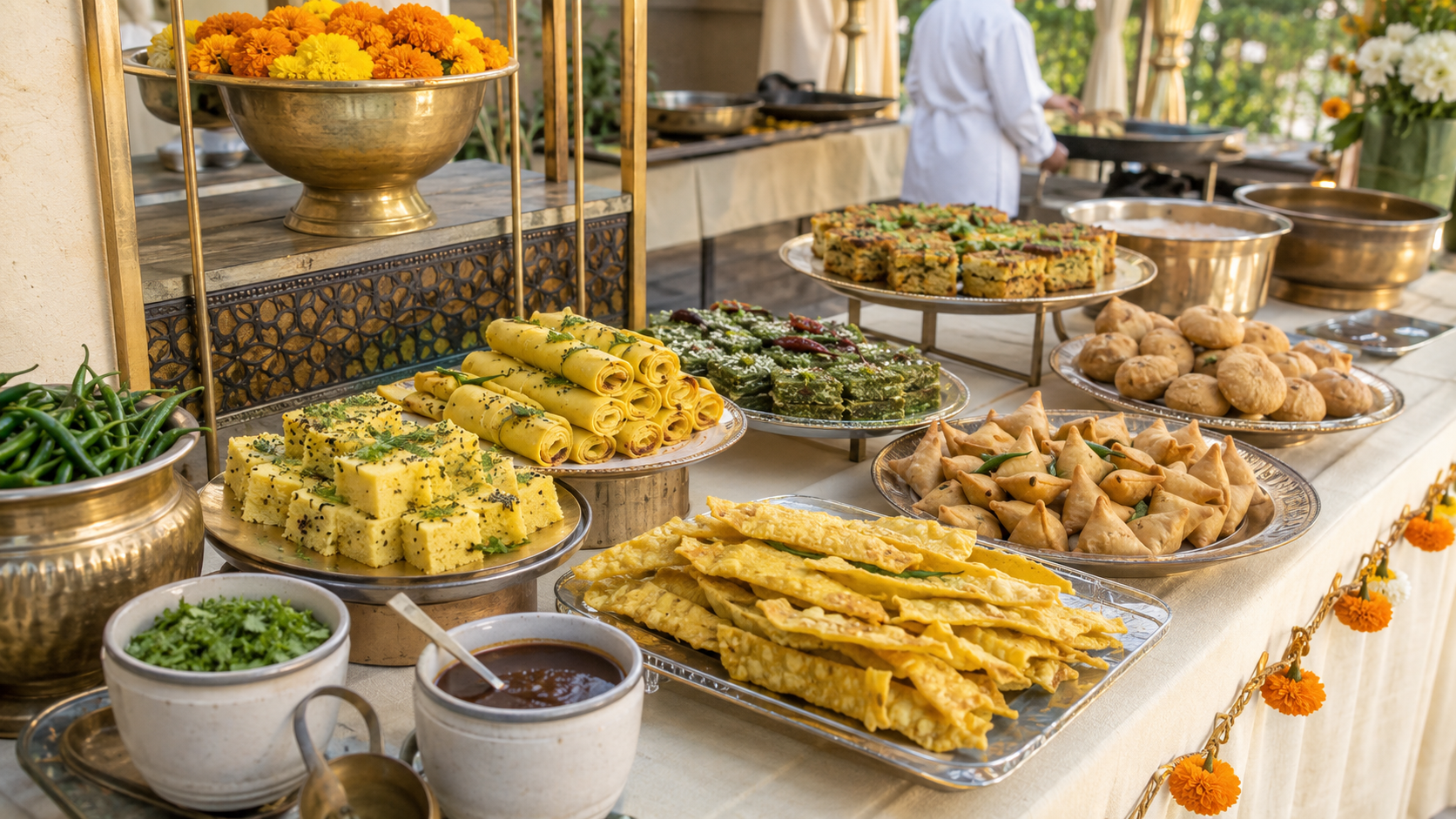
Farsan is often the most recognisable section of a Gujarati wedding spread. Select different shapes, textures and preparation styles so the counter does not look repetitive. Steamed dhokla, delicate khandvi, crisp kachori and one fresh live preparation can create better variety than eight fried snacks.
Traditional Gujarati farsan
- Khaman dhokla
- White dhokla
- Khandvi
- Patra
- Handvo
- Methi na gota
- Lilva kachori
- Vatana ghughra
- Fafda with chutney
- Khichu
- Sev khamani
- Dal vada
- Batata vada
- Mini Gujarati samosa
- Farali pattice
- Basket chaat with Gujarati chutneys
Modern vegetarian starters
- Achari paneer tikka
- Tandoori broccoli
- Stuffed mushroom
- Dahi kebab
- Hara bhara kebab
- Crispy corn
- Vegetable cigar rolls
- Mini cheese chilli toast
- Paneer and vegetable skewers
- Spinach corn pockets
- Mini millet kebabs
- Sesame vegetable toast
A practical premium combination could include khandvi, lilva kachori, patra, achari paneer tikka, stuffed mushroom and one live snack counter. For a smaller function, three or four well-served options are sufficient.
Best Live Counters for a Gujarati Wedding
Live counters add freshness and interaction, but each counter must serve a clear purpose. Too many counters increase queues, equipment requirements and staffing without necessarily improving the menu. For most weddings, combine one Gujarati speciality, one popular Indian counter and one dessert counter.
- Live khichu counter: Serve warm khichu with oil, chilli powder, cumin and selected toppings.
- Gujarati farsan station: Finish khaman, sev khamani or handvo in small batches.
- Chaat counter: Offer pani puri, dahi puri, papdi chaat and one signature option.
- Tandoor counter: Prepare paneer, mushrooms, broccoli and seasonal vegetables.
- Dosa and uttapam counter: A guest-friendly choice for breakfast and daytime functions.
- Pav bhaji counter: Suitable for Garba, Sangeet and relaxed evening celebrations.
- Fresh Indian bread counter: Useful when the menu includes rotli, puri, thepla or rotla.
- Jalebi counter: Fresh jalebi with rabri or milk creates a memorable dessert finish.
- Kulfi counter: Serve a concise choice of traditional flavours with controlled toppings.
Counter output matters. A live dish that takes several minutes per portion needs more chefs or multiple cooking points for a large crowd. Read this practical guide to live food counters for weddings before choosing the final number.
Traditional Gujarati Wedding Main Course
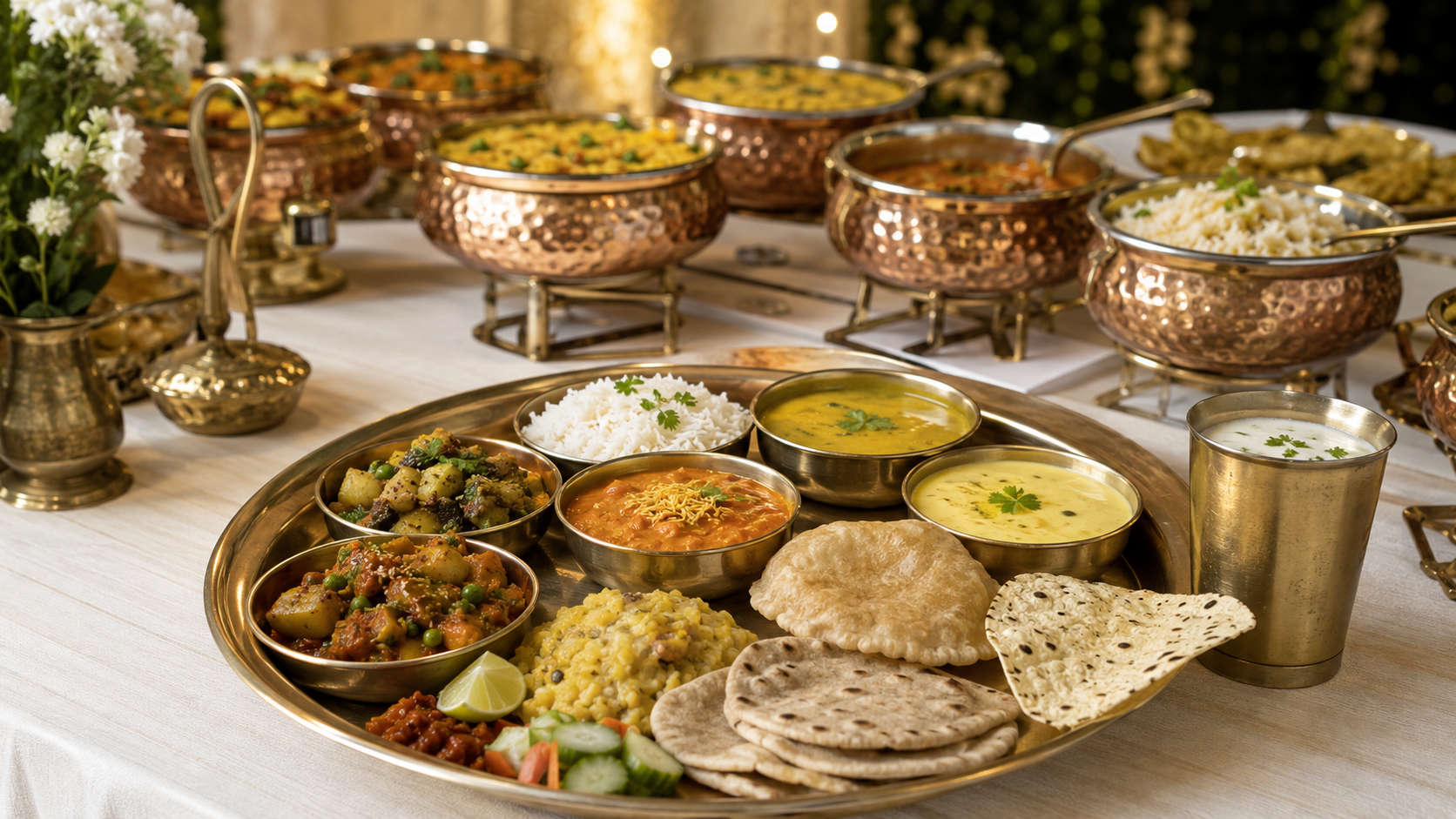
The main course should preserve the comforting character of Gujarati food while providing enough contrast. Choose two or three vegetable preparations with different gravies and textures, one dal, one kadhi, rice, khichdi and suitable breads. Avoid selecting multiple dishes that are all sweet or all potato-based.
Gujarati shaak and vegetable dishes
- Undhiyu
- Sev tameta nu shaak
- Ringna bateta nu shaak
- Bharela ringan
- Bhinda sambhariya
- Gujarati tuvar dal dhokli
- Batata nu shaak
- Tindora batata
- Valor papdi nu shaak
- Turia patra nu shaak
- Surti papdi and lilva preparation
- Lasaniya batata
- Rasawala moong
- Panchkutiyu shaak
- Chana nu shaak
- Fansi dhokli nu shaak
Undhiyu is particularly suitable for winter because the traditional vegetables used in it are seasonal. If the wedding is outside winter, choose a fresh alternative instead of forcing a dish with ingredients that may not deliver the expected quality.
Dal, kadhi and legumes
- Gujarati dal
- Gujarati kadhi
- Dal dhokli
- Moong dal
- Whole green moong curry
- Chana dal
- Vaal ni dal
- Dal fry for a multi-cuisine spread
Rice and khichdi
- Gujarati vaghareli khichdi
- Plain moong dal khichdi
- Steamed basmati rice
- Jeera rice
- Gujarati masala bhaat
- Peas pulao
- Vegetable pulao
- Saffron dry-fruit pulao
Gujarati breads
- Soft rotli
- Puri
- Methi thepla
- Plain thepla
- Bajra rotla
- Jowar rotla
- Bhakri
- Masala puri
- Phulka
- Tandoori roti for a multi-cuisine menu
Salads, Chutneys and Accompaniments
Accompaniments bring freshness and acidity to a rich wedding meal. They should be replenished in small quantities and kept at safe temperatures, especially yoghurt-based items during summer.
- Kachumber salad
- Cucumber and tomato salad
- Sprouted moong salad
- Seasonal fruit salad
- Boondi raita
- Cucumber raita
- Gujarati sweet mango pickle
- Chunda
- Gor keri
- Green coriander chutney
- Date-tamarind chutney
- Garlic chutney where permitted
- Fried and roasted papad
- Green chillies and lemon wedges
Gujarati Wedding Dessert Menu
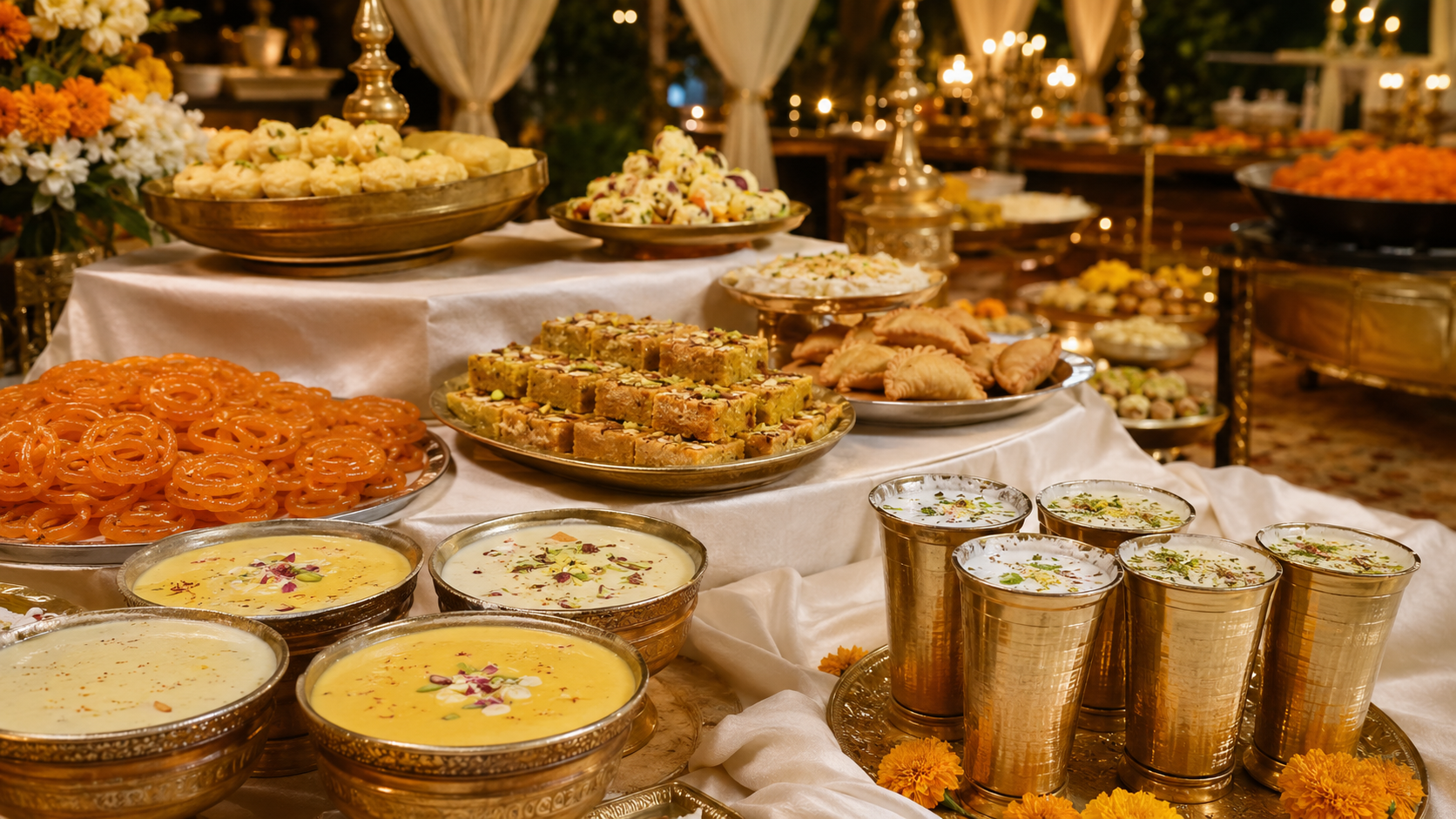
A Gujarati wedding dessert spread can be traditional, colourful and memorable without including ten similar sweets. A reliable formula is one creamy dessert, one warm or live sweet, one regional mithai and an optional frozen dessert.
Traditional Gujarati sweets
- Kesar shrikhand
- Fruit shrikhand
- Basundi
- Doodhpak
- Mohanthal
- Magas
- Sutarfeni
- Ghughra
- Kopra pak
- Adadiya pak
- Sukhdi or gol papdi
- Lapsi
- Kansar
- Aamras during mango season
Popular wedding desserts
- Live jalebi with rabri
- Rasmalai
- Gulab jamun
- Dry-fruit kulfi
- Kesar pista kulfi
- Moong dal halwa
- Gajar halwa in winter
- Fresh fruit cream
- Eggless mini desserts
For a summer lunch, shrikhand, seasonal fruit and kulfi create a refreshing combination. For a winter dinner, live jalebi-rabri, mohanthal and one chilled dessert provide temperature and texture contrast.
Gujarati Wedding Breakfast Menu
Breakfast should prepare guests for a long celebration rather than leave them feeling overly full. Use one or two live items, a concise farsan selection, fruit and dependable beverage service.
Simple Gujarati breakfast
- Khaman dhokla and khandvi
- Poha with peanuts and lemon
- Thepla with curd and pickle
- Seasonal fruit
- Tea, coffee and milk
Premium wedding breakfast
- Fresh juice and masala chai
- Live khichu counter
- Mini methi thepla with curd
- Sev khamani and lilva kachori
- Live dosa with sambar and chutneys
- Fruit, dry fruits and yoghurt
- Jalebi or a small sweet portion
For additional ideas and service planning, explore the complete Indian wedding breakfast menu.
Gujarati Wedding Lunch Menu
A daytime wedding lunch is an ideal setting for a traditional Gujarati meal. Keep welcome drinks refreshing and the main course flavourful but moderate. A very large starter section is rarely necessary before a complete lunch.
Ready-to-use traditional lunch menu
- Drinks: Masala chaas and kokum sharbat
- Farsan: Khandvi, patra, lilva kachori and khaman
- Shaak: Undhiyu or seasonal mixed shaak, sev tameta and bhinda sambhariya
- Dal and kadhi: Gujarati dal and kadhi
- Rice: Vaghareli khichdi and steamed rice
- Breads: Rotli and puri
- Accompaniments: Kachumber, papad, pickle and chutneys
- Desserts: Shrikhand, mohanthal and seasonal fruit
Premium Gujarati Wedding Dinner Menu
An evening reception can include more interactive service and modern presentation while retaining Gujarati flavours. Passed snacks reduce pressure on popular counters during guest arrival.
- Welcome: Kesar badam milk, fresh lime mint cooler and water
- Passed farsan: Mini khandvi, lilva kachori and patra pinwheels
- Modern starters: Achari paneer tikka and stuffed mushrooms
- Live counters: Khichu, chaat and tandoor
- Gujarati main course: Seasonal undhiyu, sev tameta, bharela ringan, Gujarati dal and kadhi
- Rice and breads: Masala bhaat, khichdi, rotli, puri and bajra rotla
- Accompaniments: Salad, raita, papad, chunda and chutneys
- Desserts: Live jalebi-rabri, basundi, mohanthal and kulfi
- After-meal: Tea, coffee and selected mouth fresheners
Gujarati Menu for Mehendi, Garba and Sangeet
Pre-wedding functions need food that is easy to eat while guests socialise, dance or participate in ceremonies. Keep portions compact and counters spread across the venue to avoid one crowded dining zone.
Mehendi lunch ideas
Serve chaas, khaman, khandvi, mini thepla rolls, light Gujarati dal, seasonal shaak, rice and shrikhand. A chaat or dosa counter can provide one interactive element without dominating the function.
Garba night menu
Use energetic small plates such as khichu, handvo, fafda, sev khamani, mini kachori, pav bhaji and chaat. Add a focused dinner with dal-kadhi, two shaak, rice and fresh breads. Keep water and light beverages continuously available.
Sangeet dinner ideas
Combine Gujarati farsan with a few modern starters and live counters. Since guests move between performances and food stations, passed service and bite-size portions are especially useful. The detailed Sangeet food menu guide offers further combinations.
Simple, Standard and Premium Menu Structure
| Menu Type | Practical Structure | Best Suited For |
|---|---|---|
| Simple | 1–2 drinks, 3 farsan, 4–5 mains, rice, 2 breads and 2 desserts | Home functions and intimate weddings |
| Standard | 2 drinks, 5 starters, 2 live counters, 6–7 mains and 3 desserts | Medium-sized wedding lunch or dinner |
| Premium | 3 drinks, passed snacks, 6–8 starters, 3–4 counters, regional mains and 4–5 desserts | Large weddings and receptions |
These are planning ranges, not strict rules. Venue size, service duration and the number of guests arriving together can change the ideal structure.
How Much Food Variety Is Enough?
More dishes do not automatically create a better guest experience. Every additional item needs ingredients, storage, kitchen space, staff, serving equipment and replenishment. A focused menu lets the catering team maintain temperature, texture and presentation more consistently.
| Guest Count | Suggested Starters | Live Counters | Desserts |
|---|---|---|---|
| Up to 100 | 3–5 | 1–2 | 2–3 |
| 100–250 | 5–6 | 2–3 | 3–4 |
| 250–500 | 6–8 | 3–5 with adequate capacity | 4–5 |
| 500+ | Custom service plan | Zoned or duplicated counters | Capacity-based selection |
For large weddings, duplicate serving points for high-demand items instead of adding unrelated dishes. This reduces queues while keeping the menu coherent.
Jain and No-Onion-No-Garlic Gujarati Menu Planning
Never assume that every family follows the same dietary practice. Ask for an approved ingredient list and clarify root vegetables, green vegetables, dairy products, packaged ingredients and preparation timing. Written confirmation prevents misunderstandings.
- Use separately identified ingredients, utensils and preparation surfaces.
- Do not share frying oil when strict separation is requested.
- Keep serving spoons and counter equipment separate.
- Brief chefs, servers and supervisors before preparation begins.
- Use accurate labels without making claims that the kitchen cannot verify.
- Assign one responsible supervisor to monitor the section.
Families planning a strict menu can also review these detailed Jain wedding menu ideas.
Common Gujarati Wedding Menu Mistakes
- Adding too many fried farsan items with similar texture
- Serving several sweet gravies without enough savoury balance
- Choosing seasonal dishes when their ingredients are not at their best
- Opening live counters without calculating portions per hour
- Repeating paneer in starters, counters and multiple main dishes
- Ignoring food preferences of children and senior guests
- Not confirming Jain or no-onion-no-garlic requirements clearly
- Placing all popular counters in one congested area
- Keeping dairy desserts or chaas outside safe temperature control
- Comparing catering proposals without checking staffing and inclusions
Final Gujarati Wedding Catering Checklist
- Wedding date, venue and exact service timings
- Expected guest count for every function
- Traditional, Jain and dietary requirements in writing
- Final welcome drinks, farsan, counters, mains and desserts
- Seasonal availability of vegetables, mangoes and winter specialities
- Chef, server and counter-staff allocation
- Kitchen, refrigeration, electricity, water and ventilation
- Buffet layout and queue-management plan
- Separate equipment where dietary separation is required
- Tasting, final quantities and replenishment schedule
Plan a Menu That Feels Authentically Yours
The ideal Gujarati wedding food menu should reflect the family’s traditions while remaining practical for the venue, season and guest count. Use this guide as a starting point, then remove repetitive dishes and prioritise freshness, service and flavour balance.
If you need professional help planning the final combination, Blurry Curry can create a customised vegetarian wedding menu based on your function schedule, preferred regional dishes and service requirements. Explore its wedding catering services for more information.
Frequently Asked Questions
What should be included in a Gujarati wedding food menu?
A balanced menu can include welcome drinks, Gujarati farsan, selected live counters, seasonal shaak, dal, kadhi, rice, khichdi, breads, salads, chutneys and three or four contrasting desserts.
Which Gujarati dishes are best for a wedding?
Popular choices include khandvi, khaman, patra, lilva kachori, undhiyu, sev tameta, Gujarati dal, kadhi, vaghareli khichdi, puri, shrikhand, basundi, mohanthal and live jalebi.
How many starters are enough for a Gujarati wedding?
Three to five starters may be enough for an intimate celebration, while five to eight can suit a larger reception. Mix steamed, grilled and fried choices rather than serving several similar snacks.
Which live counters work well with Gujarati wedding food?
Khichu, farsan, chaat, tandoor, dosa, fresh Indian breads, jalebi and kulfi counters can work well. Choose counters according to the event time, kitchen facilities and expected serving capacity.
What is a good Gujarati wedding lunch menu?
A practical lunch can include chaas, kokum sharbat, four farsan, three seasonal shaak, Gujarati dal, kadhi, khichdi, rice, rotli, puri, accompaniments, shrikhand and one additional sweet.
What desserts are popular at Gujarati weddings?
Shrikhand, basundi, doodhpak, mohanthal, magas, ghughra, live jalebi-rabri, kulfi and seasonal aamras are popular choices. Select contrasting desserts instead of too many milk-based sweets.
Can a Gujarati wedding menu be completely Jain?
Yes, but the family’s exact rules should be confirmed in writing. Ingredients, oil, utensils, preparation surfaces and service equipment may need separation from the regular menu.
Is undhiyu suitable for every wedding season?
Undhiyu is traditionally best during winter when its characteristic vegetables are in season. For other months, a fresh seasonal Gujarati shaak may provide better quality.
How many desserts should be served at a wedding?
Two or three desserts can suit an intimate function, while three to five are generally enough for a large reception. Include different temperatures and textures for better variety.
How can queues at live food counters be reduced?
Choose dishes with suitable output speed, prepare ingredients in advance, distribute counters across the venue, add chefs at peak time and duplicate the most popular serving points for large gatherings.