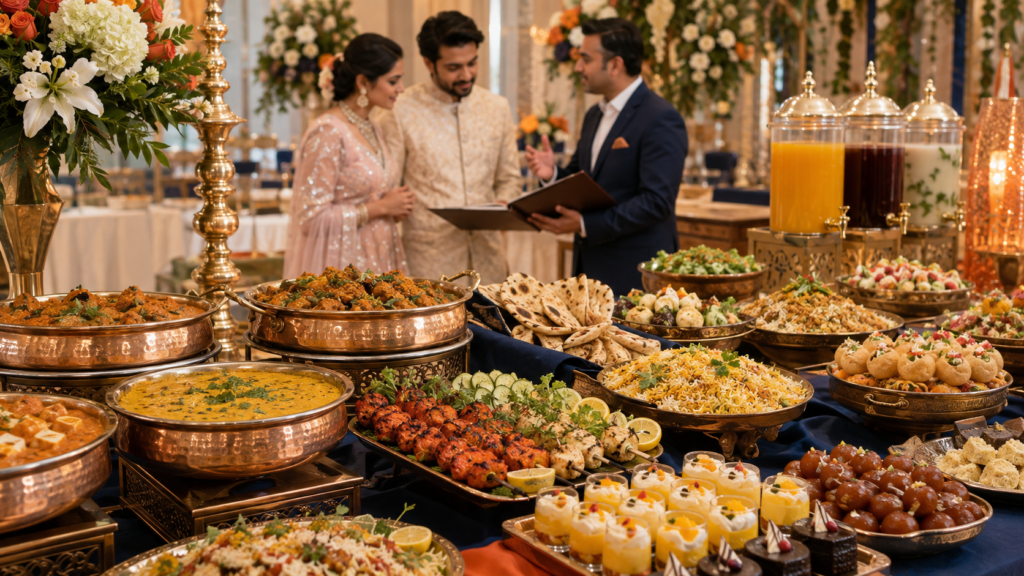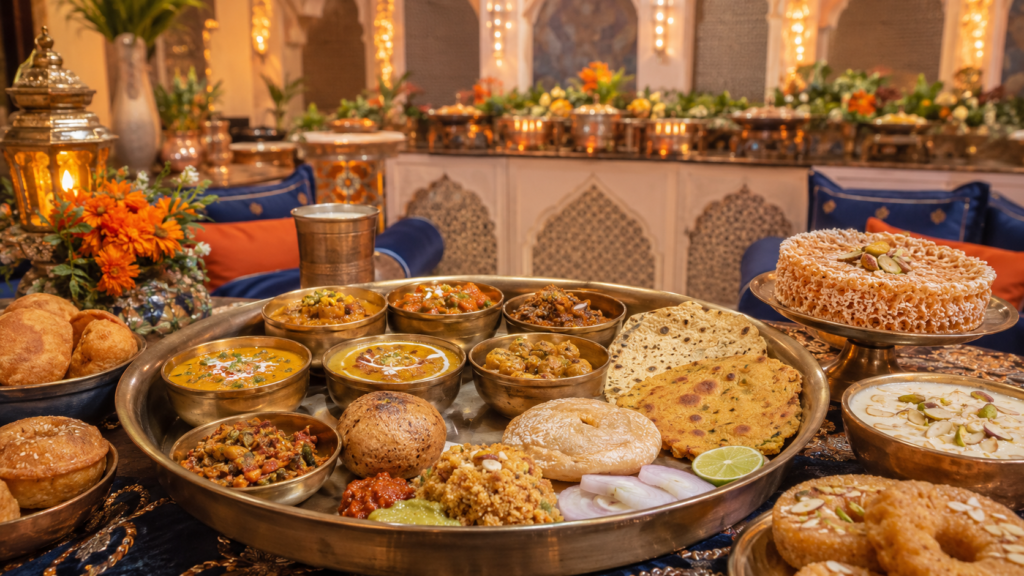
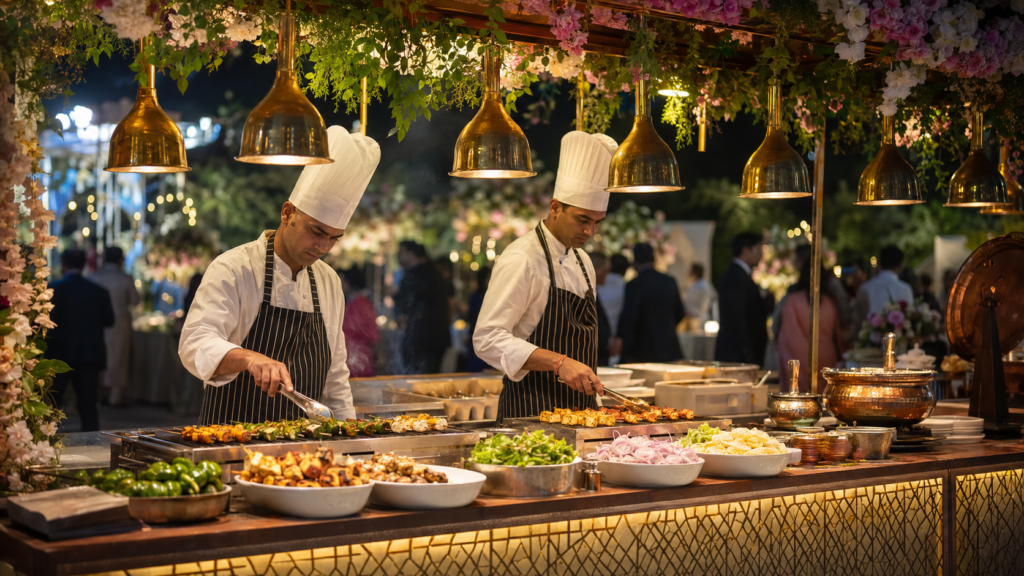
A well-planned wedding main course menu should feel generous without becoming repetitive. The best Indian wedding buffet combines rich celebratory favourites with lighter dishes, balanced vegetarian and non-vegetarian choices, fresh breads, aromatic rice and accompaniments that complete the meal.
The main course is served after guests have already enjoyed welcome drinks, starters and possibly live counters. Every dish therefore does not need to be heavy or intensely spiced. A thoughtful selection of contrasting flavours and textures usually creates a better dining experience than an unnecessarily long list of similar curries.
How to Plan a Balanced Wedding Main Course Menu
Start by looking at the complete event menu rather than choosing the main course in isolation. If the starter section already contains paneer tikka, avoid filling the buffet with several more paneer preparations. When chaat, pasta and tandoor counters are available, guests may prefer fewer main-course dishes but will expect them to be fresh and well executed.
- One premium paneer or kofta dish
- One seasonal vegetable
- One contrasting regional dish
- One slow-cooked dal
- Rice, pulao or biryani
- Two to three fresh breads
- Raita and fresh salad
- Chutney, pickle and papad
For a mixed menu, add one chicken dish and one mutton or fish preparation only when the expected non-vegetarian guest count justifies it. Vegetarian options should remain complete enough to form a satisfying meal on their own.
40+ Vegetarian Main Course Dishes for a Wedding
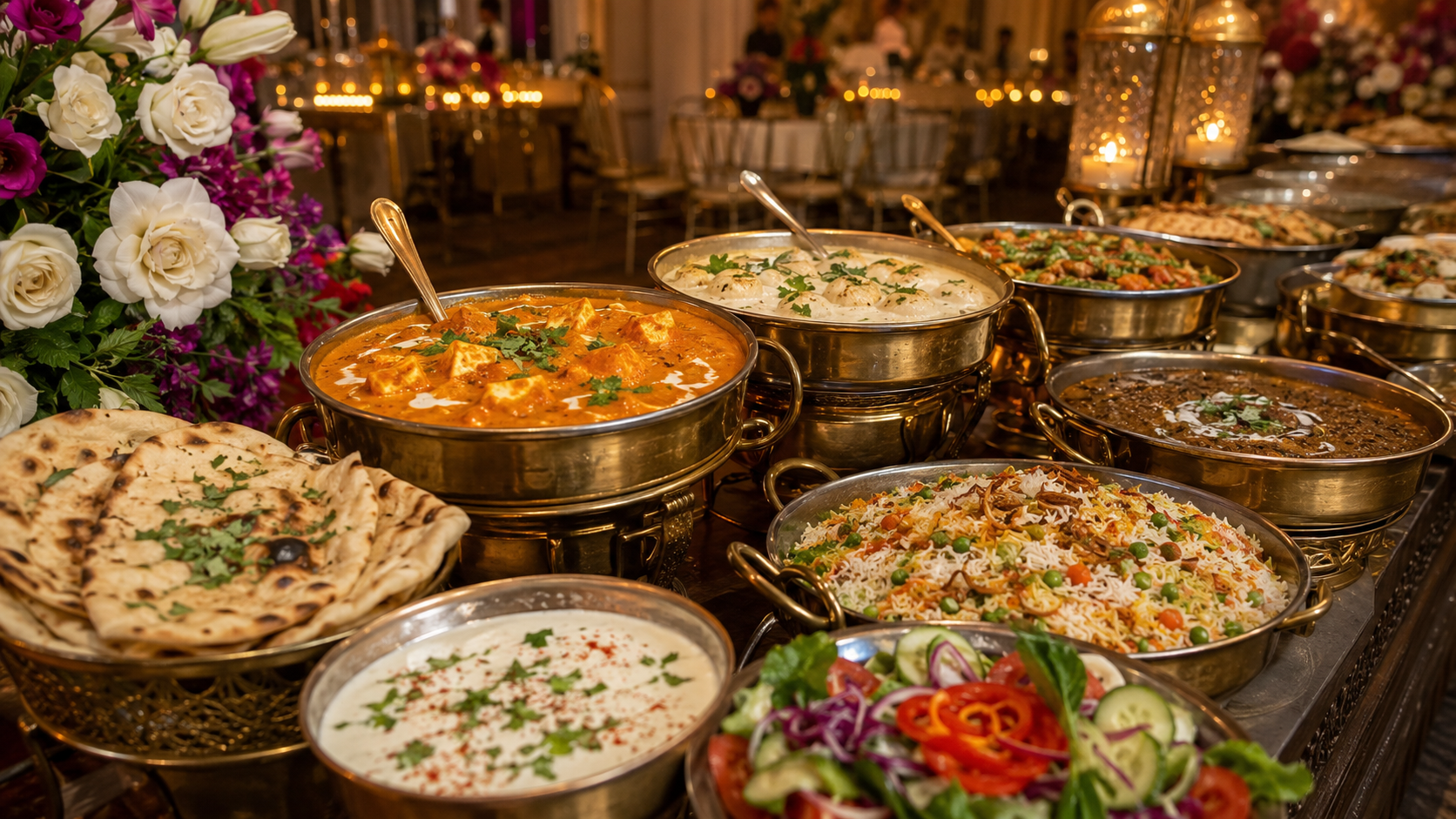
A strong vegetarian section should offer variety in ingredients, gravy, cooking method and richness. Selecting five creamy dishes may look extensive on paper, but the flavours can become monotonous. Combine one rich celebratory curry with a lighter vegetable, a regional speciality and a dependable dal.
Popular Paneer and Kofta Dishes
- Paneer lababdar
- Shahi paneer
- Paneer butter masala
- Kadhai paneer
- Palak paneer
- Matar paneer
- Paneer do pyaza
- Malai kofta
- Nargisi kofta
- Stuffed vegetable kofta curry
Vegetable Main Course Ideas
- Subz miloni
- Diwani handi
- Vegetable jalfrezi
- Kadhai mushroom
- Mushroom matar masala
- Bhindi do pyaza
- Dum aloo Kashmiri
- Banarasi dum aloo
- Gobi adraki
- Navratan korma
- Jackfruit masala
- Vegetable kolhapuri
Regional Vegetarian Favourites
- Sarson ka saag with makki ki roti
- Rajasthani gatta curry
- Ker sangri
- Gujarati undhiyu
- Kashmiri dum aloo
- Himachali madra
- South Indian vegetable kurma
- Avial
- Chana masala
- Amritsari chole
Dal Options
- Slow-cooked dal makhani
- Dal tadka
- Dal panchmel
- Yellow moong dal
- Dhaba-style dal fry
- Gujarati dal
20+ Non-Vegetarian Wedding Main Course Dishes
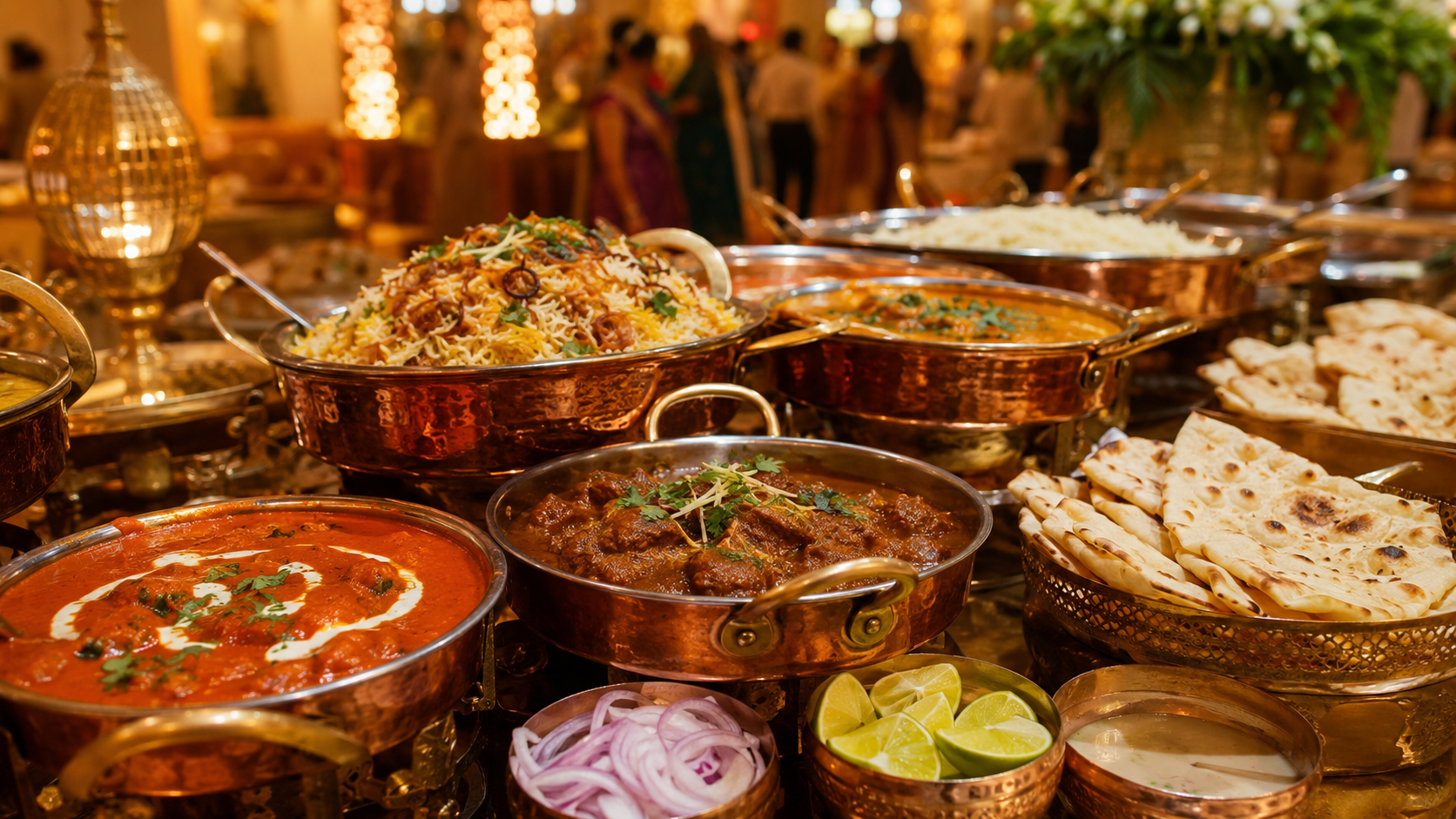
The non-vegetarian menu should reflect the guests’ preferences and the style of the celebration. One excellent chicken curry and one signature mutton or fish dish are often more memorable than four average gravies. Keep their spice levels balanced so that the dishes work with rice as well as Indian breads.
Chicken Main Course
- Butter chicken
- Chicken lababdar
- Kadhai chicken
- Chicken changezi
- Chicken do pyaza
- Dhaba chicken curry
- Chicken korma
- Murgh musallam
- Chicken Chettinad
- Chicken stew for a lighter option
Mutton and Lamb Dishes
- Mutton rogan josh
- Laal maas
- Mutton korma
- Bhuna gosht
- Mutton rara
- Keema matar
- Slow-cooked mutton curry
Fish and Coastal Options
- Goan fish curry
- Bengali fish curry
- Fish moilee
- Malabar fish curry
- Prawn masala
- Prawn coconut curry
Fish and seafood require careful cold-chain management and timely service. Discuss sourcing, transport and holding arrangements with the caterer before including them in an outdoor or destination wedding.
Best Rice, Biryani and Indian Breads
Rice and breads connect the entire main course. If a rich biryani is selected, keep the second rice simple. Fresh breads should be produced in smaller batches because pre-cooked naan quickly becomes dry and chewy.
- Jeera rice
- Peas pulao
- Vegetable dum biryani
- Hyderabadi chicken biryani
- Mutton dum biryani
- Kashmiri pulao
- Butter naan
- Garlic naan
- Tandoori roti
- Lachha paratha
- Missi roti
- Roomali roti
For quantity planning, the number of starters, live counters and rice options must be considered together. Read our detailed guide on food quantity for 200 guests for practical category-wise estimates.
Sample Wedding Main Course Menus
Classic Vegetarian Wedding Menu
- Paneer lababdar
- Malai kofta
- Seasonal mixed vegetables
- Dal makhani
- Jeera rice
- Butter naan, tandoori roti and lachha paratha
- Boondi raita, salad, chutney, pickle and papad
Premium Vegetarian Wedding Menu
- Paneer khurchan
- Subz miloni
- Kashmiri dum aloo
- Dal bukhara
- Vegetable dum biryani
- Live garlic naan, missi roti and roomali roti
- Pineapple raita, fresh salads and traditional accompaniments
Vegetarian and Non-Vegetarian Wedding Menu
- Paneer lababdar
- Diwani handi
- Dal makhani
- Butter chicken
- Mutton rogan josh
- Vegetable pulao and chicken biryani
- Butter naan, tandoori roti and lachha paratha
- Mixed raita, green salad, chutney, pickle and papad
Jain-Friendly Main Course Menu
- Jain paneer curry without onion and garlic
- Raw banana kofta
- Capsicum and corn preparation
- Jain dal
- Jeera rice
- Tandoori roti and plain paratha
Jain dishes should be prepared with separate utensils, ingredients and service labels when required. For more combinations, see our complete Jain wedding menu.
Season-Wise Wedding Main Course Ideas
| Season | Good choices | What to manage carefully |
|---|---|---|
| Summer | Lighter gravies, seasonal vegetables, dal tadka, jeera rice and cooling raita | Very rich curries, dairy holding temperatures and outdoor buffet exposure |
| Monsoon | Hot breads, aromatic pulao, paneer curry, dal makhani and freshly cooked vegetables | Food protection, slippery service areas and moisture-sensitive items |
| Winter | Sarson ka saag, rich paneer, slow-cooked dal, rogan josh and hot live breads | Maintaining serving temperature throughout a long evening |
How Many Main Course Dishes Should a Wedding Have?
For a medium-sized Indian wedding, three vegetarian gravies, one dal, one rice preparation and two bread choices are generally sufficient when starters and live counters are also available. A mixed menu can add one or two non-vegetarian dishes. Larger premium celebrations may offer more regional variety, but every additional dish must have a clear purpose.
For an event with around 100 attendees, our wedding menu for 100 guests explains how the main course fits with welcome drinks, starters, live counters and desserts.
Common Main Course Planning Mistakes
- Too many similar gravies: Repeating cream, tomato and cashew-based dishes makes the buffet feel monotonous.
- Ignoring starters: A heavy starter menu reduces demand for the main course.
- Calculating meat for everyone: Confirm the approximate vegetarian and non-vegetarian split first.
- Preparing breads too early: Naan and roti should reach guests fresh and hot.
- Missing clear labels: Mark vegetarian, non-vegetarian, Jain, spicy and allergen-sensitive dishes.
- Choosing only rich food: Add a lighter vegetable, simple rice and fresh accompaniments.
- Overlooking service speed: Attractive counters are useful only when they can serve guests without long queues.
Final Checklist Before Confirming the Menu
- Confirm the expected guest count and attendance buffer.
- Estimate vegetarian, non-vegetarian and Jain requirements separately.
- Review the main course alongside starters and live counters.
- Select dishes that differ in ingredients, texture and gravy style.
- Arrange a tasting for key signature dishes.
- Confirm live tandoor equipment, staff and serving capacity.
- Check food holding, refill and labelling arrangements.
- Plan a practical quantity instead of a full portion of every dish for every guest.
The ideal Indian wedding main course is not defined by the longest buffet. It is defined by flavour, freshness, variety and reliable service. A focused selection prepared and served well will usually create a stronger impression than dozens of repetitive items.
Frequently Asked Questions
What should an Indian wedding main course include?
A balanced menu normally includes two or three vegetarian gravies, one seasonal vegetable, one dal, rice or biryani, two or three Indian breads, raita, salad and accompaniments. One or two non-vegetarian dishes can be added according to the guest profile.
How many main course dishes are enough for a wedding?
Approximately four vegetarian mains including dal, plus rice and breads, are generally sufficient when starters and live counters are available. Add one or two meat dishes for a mixed menu. The ideal number depends on the complete event menu.
Which vegetarian main course is best for a wedding?
A combination such as paneer lababdar, subz miloni, a regional vegetable and dal makhani provides contrasting flavours and is suitable for many Indian wedding menus.
Which non-vegetarian dishes are popular at weddings?
Butter chicken, chicken curry, mutton rogan josh, mutton korma, chicken biryani and regional fish curries are popular choices. Final selection should consider local preferences, season and safe service arrangements.
Should Indian breads be prepared at a live counter?
Whenever the venue permits, a properly staffed live tandoor is preferable because naan and roti taste best when served fresh. The counter must have enough equipment and staff to prevent queues.
How can we avoid food waste at a wedding?
Confirm attendance, calculate vegetarian and non-vegetarian guests separately, consider the effect of starters and live counters, and avoid preparing a full portion of every individual dish for every guest.