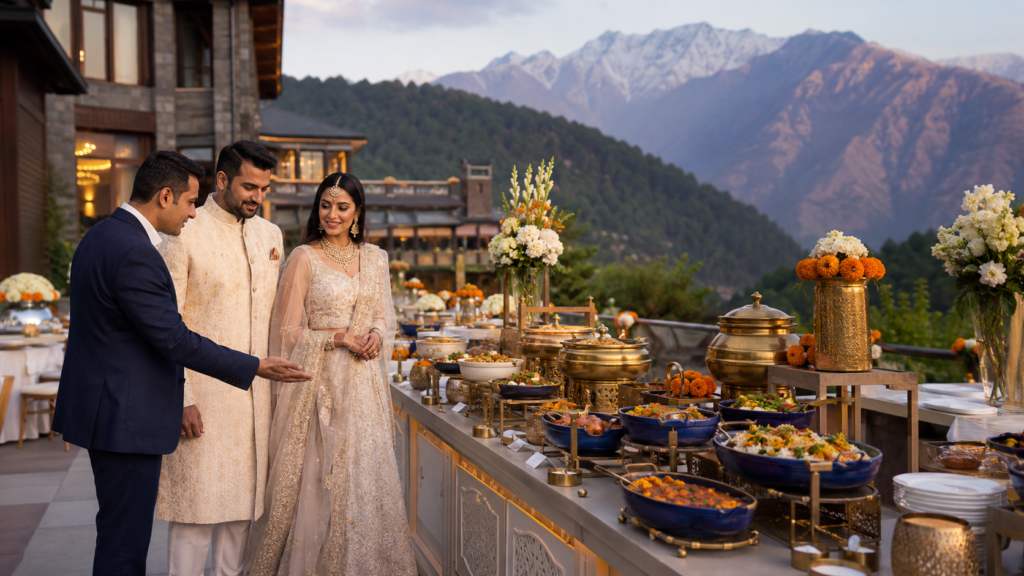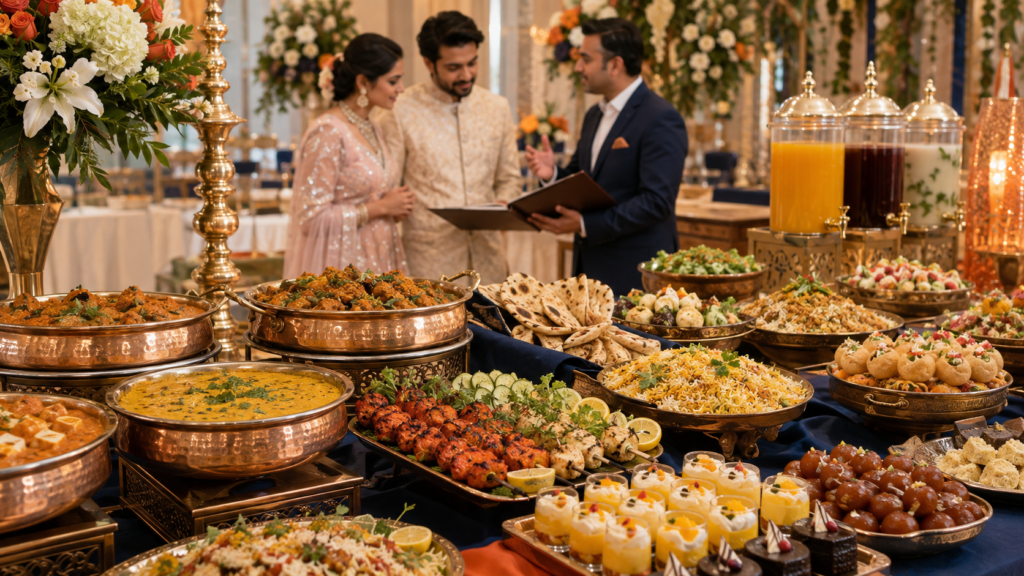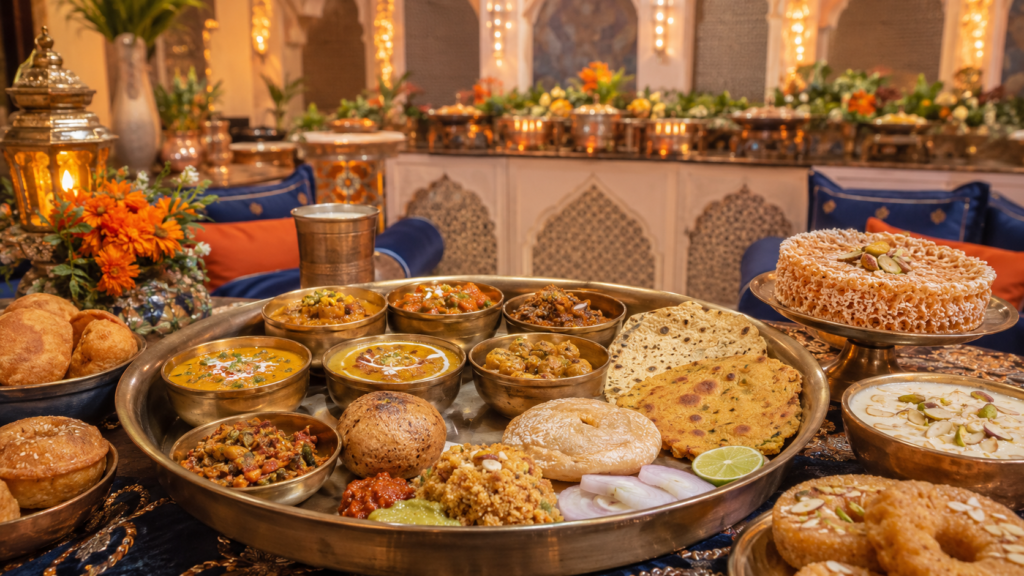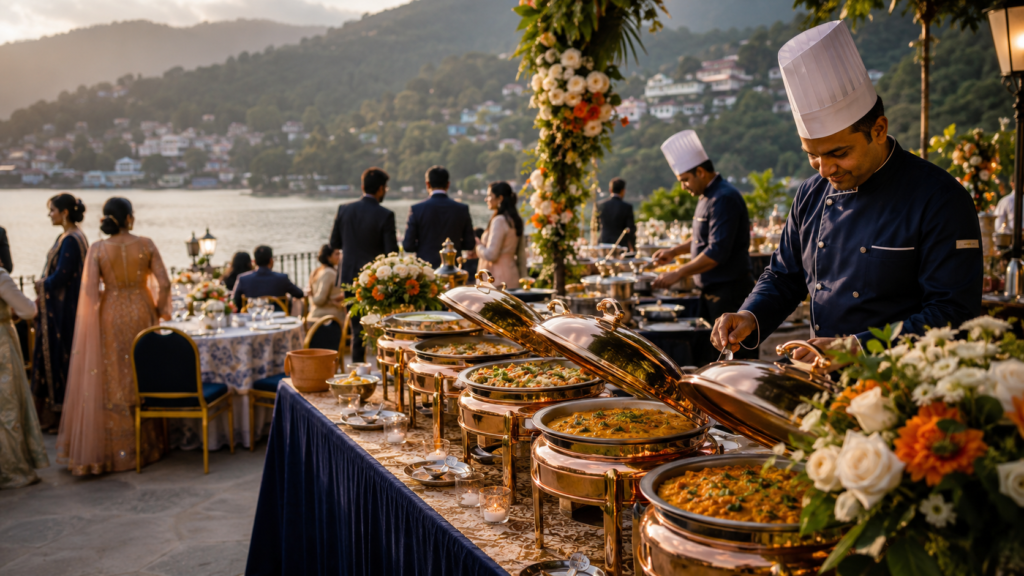
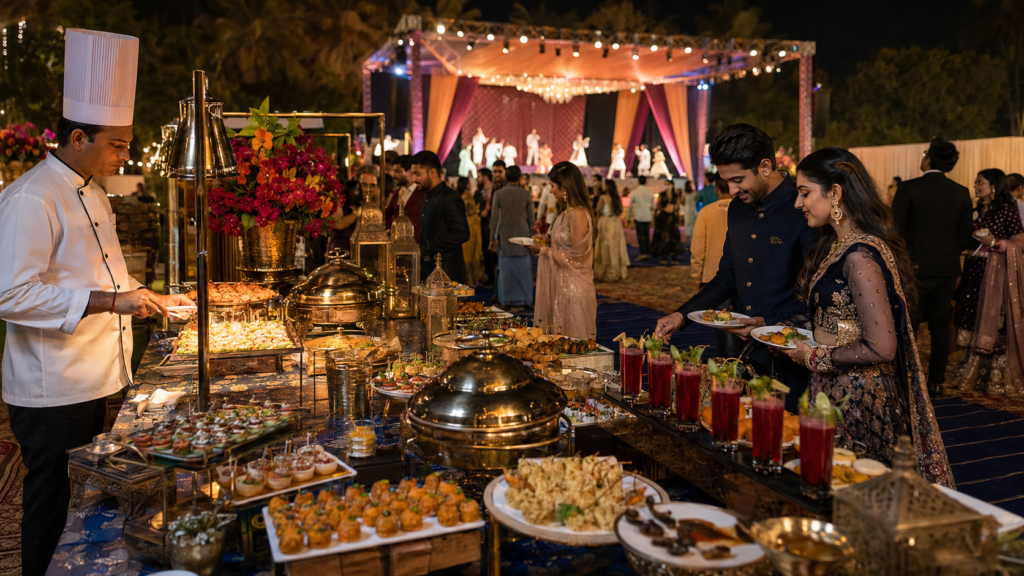
A Sangeet ceremony is one of the most energetic and entertaining functions of an Indian wedding. Between dance performances, music, family celebrations and endless photographs, guests need food that is delicious, easy to enjoy and available throughout the evening. A well-planned Sangeet food menu should therefore combine attractive starters, interactive live counters, satisfying main-course dishes, refreshing drinks and memorable desserts.
Quick answer: The best Sangeet food menu normally includes 6–8 starters, 3–5 live counters, 7–10 main-course dishes, breads, rice, salads, 3–4 desserts and 3–5 beverages. Keep the menu interactive, easy to eat and suitable for guests of every age.
This detailed guide contains more than 80 vegetarian and non-vegetarian Sangeet menu ideas. You can use these options to build a practical menu according to your guest count, event timing, venue and budget.
What Makes a Good Sangeet Food Menu?
A Sangeet menu is different from a traditional wedding dinner. Guests do not remain seated throughout the function. They move between the stage, dance floor, food counters and seating areas. Heavy dishes served too early can make guests uncomfortable, while limited starters may result in long queues and unnecessary waiting.
A successful Sangeet catering menu should have:
- Easy-to-eat starters that can be served while guests are socialising
- Separate vegetarian and non-vegetarian serving stations
- Live counters that add interaction and entertainment
- A balanced main course for younger and older guests
- Refreshing mocktails and sufficient drinking water
- At least one familiar dessert and one premium dessert
- A simple late-night option for guests staying until the end
Best Vegetarian Starters for a Sangeet Ceremony
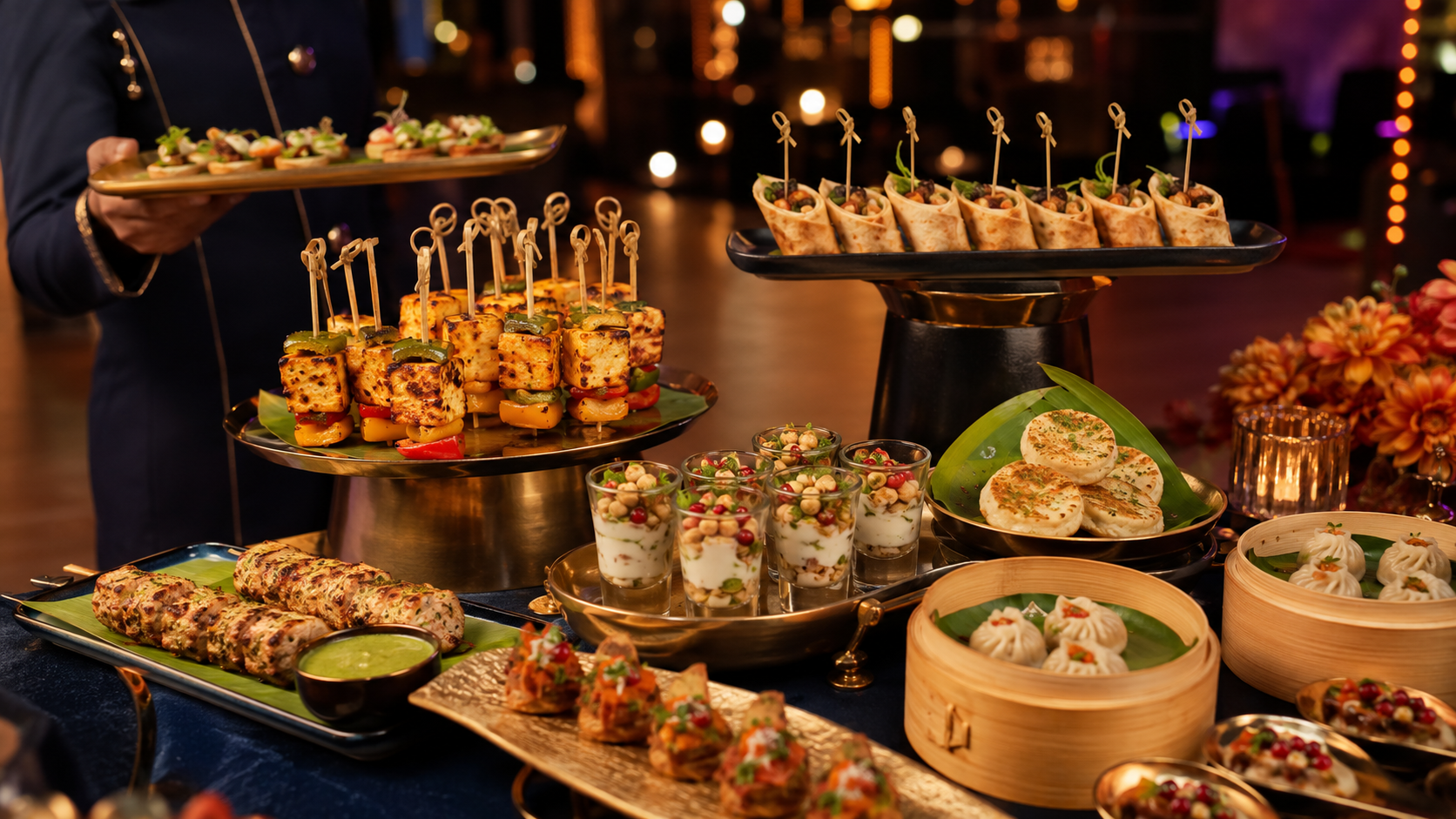
Vegetarian starters form an important part of an Indian Sangeet menu. Select dishes with different flavours and textures instead of choosing several similar paneer or fried items. Ideally, include grilled, crispy, spicy and mildly flavoured options.
Popular vegetarian starter ideas
- Paneer tikka
- Achari paneer tikka
- Malai paneer tikka
- Hariyali paneer tikka
- Tandoori mushroom
- Dahi ke kebab
- Hara bhara kebab
- Veg seekh kebab
- Crispy corn
- Honey chilli potato
- Chilli paneer
- Veg spring rolls
- Cheese corn balls
- Stuffed tandoori aloo
- Mini vegetable cutlets
- Lotus stem chips
- Veg dim sums
- Mini samosa chaat bites
For a balanced menu, choose approximately four to six vegetarian starters. For example, paneer tikka, dahi ke kebab, crispy corn, veg dim sums and honey chilli potato provide enough variety without making the menu repetitive.
Best Non-Vegetarian Sangeet Starters
If non-vegetarian food is being served, keep its preparation and serving area clearly separate. Select two or three chicken options and add a fish or mutton item only when it matches the budget and guest preferences.
- Chicken tikka
- Malai chicken tikka
- Achari chicken tikka
- Tandoori chicken
- Chicken seekh kebab
- Mutton seekh kebab
- Chicken reshmi kebab
- Amritsari fish
- Fish fingers with tartar dip
- Chilli chicken
- Chicken 65
- Chicken lollipops
- Mini chicken sliders
- Chicken dim sums
A combination such as malai chicken tikka, mutton seekh kebab and Amritsari fish works well for a premium function. For a controlled budget, chicken tikka and chilli chicken provide familiar flavours with wide guest appeal.
Recommended Number of Starters by Guest Count
| Guest Count | Vegetarian Starters | Non-Vegetarian Starters | Recommended Service |
|---|---|---|---|
| Up to 50 guests | 3–4 | 1–2 | Tray service with one counter |
| 50–100 guests | 4–5 | 2–3 | Tray service and separate stations |
| 100–200 guests | 5–6 | 3–4 | Multiple service teams |
| More than 200 guests | 6–8 | 3–5 | Zoned counters and tray service |
These quantities represent the number of starter varieties, not the number of portions. Actual food quantities should be calculated according to guest count, event duration and whether a full dinner is being served.
Live Food Counters for a Sangeet Function
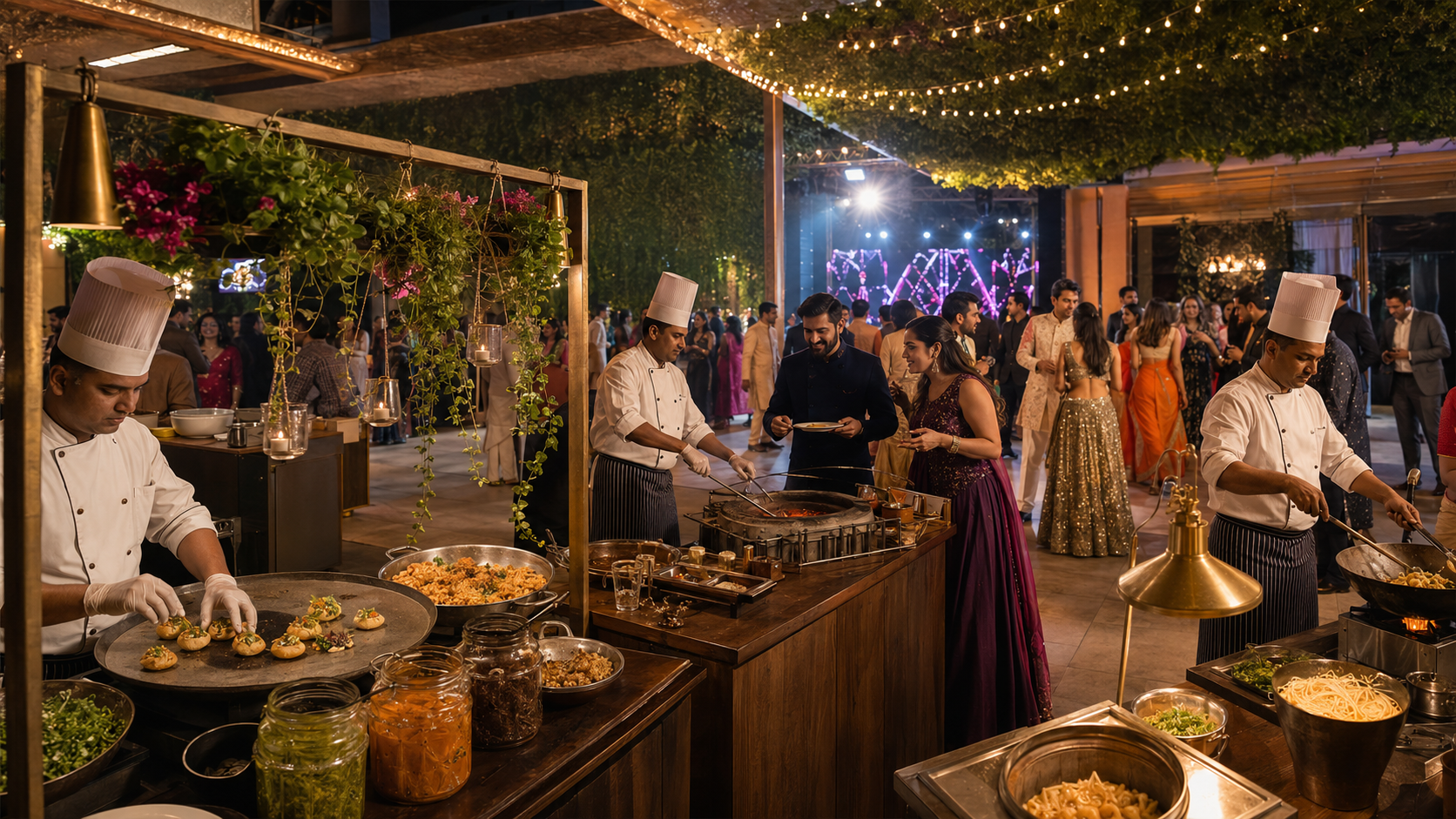
Live counters suit a Sangeet because they provide fresh food while adding visual activity to the venue. Guests can customise flavours, sauces and toppings without waiting for the complete buffet to open.
Indian live counter ideas
- Gol gappa counter with flavoured water
- Delhi-style chaat counter
- Raj kachori station
- Palak patta chaat
- Pav bhaji counter
- Amritsari kulcha counter
- Mini dosa and uttapam counter
- Tandoori kebab station
- Roomali roti with kebab counter
- Moong dal chilla counter
Modern live counter ideas
- Live pasta counter
- Wood-fired pizza station
- Asian noodles and stir-fry counter
- Dim sum station
- Mexican taco counter
- Lebanese falafel and pita station
- Loaded fries counter
- Mini burger and slider station
Three to five counters are sufficient for most functions. Too many live stations can increase cost, consume venue space and create queues. Choose counters that complement the main course instead of repeating the same flavours.
Complete Vegetarian Sangeet Main-Course Menu
Although starters receive most of the attention, a complete dinner remains important—especially for senior guests and families. The main course should combine one paneer dish, one seasonal vegetable, one dal, one regional speciality, rice and Indian breads.
Vegetarian curries and vegetables
- Paneer lababdar
- Shahi paneer
- Kadhai paneer
- Paneer butter masala
- Malai kofta
- Subz miloni
- Diwani handi
- Methi matar malai
- Bhindi do pyaza
- Dum aloo Banarasi
- Veg jalfrezi
- Mushroom masala
Dal and regional dishes
- Dal makhani
- Dal tadka
- Rajma masala
- Punjabi chole
- Rajasthani dal baati churma
- Kashmiri dum aloo
- Uttarakhand-style local dal
Rice and Indian breads
- Veg dum biryani
- Jeera rice
- Peas pulao
- Steamed basmati rice
- Butter naan
- Garlic naan
- Lachha paratha
- Tandoori roti
- Missi roti
Non-Vegetarian Main-Course Ideas
Two well-prepared non-vegetarian main-course dishes are generally better than a long list of average dishes. A chicken curry combined with mutton or biryani provides sufficient choice for most mixed menus.
- Butter chicken
- Chicken lababdar
- Kadhai chicken
- Chicken curry
- Rara chicken
- Mutton rogan josh
- Mutton curry
- Laal maas
- Fish curry
- Chicken dum biryani
- Mutton biryani
Three Ready-to-Use Sangeet Menu Combinations
1. Practical vegetarian Sangeet menu
- Welcome drinks: Mint mojito and masala lemonade
- Starters: Paneer tikka, hara bhara kebab, crispy corn and chilli potato
- Live counters: Chaat and pasta
- Main course: Paneer lababdar, mix vegetable, dal makhani and veg biryani
- Breads: Butter naan and tandoori roti
- Desserts: Gulab jamun and ice cream
2. Premium vegetarian and non-vegetarian menu
- Welcome drinks: Fruit punch, virgin mojito and jaljeera
- Veg starters: Achari paneer tikka, dahi kebab, veg dim sums and lotus stem chips
- Non-veg starters: Malai chicken tikka, mutton seekh kebab and Amritsari fish
- Live counters: Chaat, Italian, Asian and kebab station
- Veg main course: Paneer lababdar, subz miloni and dal makhani
- Non-veg main course: Butter chicken and mutton rogan josh
- Rice: Veg biryani and chicken biryani
- Desserts: Jalebi-rabri, rasmalai and ice cream
3. Modern youth-focused Sangeet menu
- Welcome drinks: Mocktail bar with mojitos and fruit coolers
- Starters: Mini sliders, cheese corn balls, chicken tikka and fish fingers
- Live counters: Pizza, pasta, tacos and loaded fries
- Indian dinner: Kadhai paneer, dal makhani, butter chicken, jeera rice and naan
- Desserts: Brownies, mini cheesecakes, kulfi and live ice cream
- Late-night snack: Masala chai with mini sandwiches or Maggi
Best Mocktails and Welcome Drinks
Dancing and crowded venues increase beverage consumption. Position water and drink stations where guests can reach them easily, but keep them away from electrical equipment and the main dance floor.
- Virgin mojito
- Watermelon cooler
- Orange basil punch
- Fruit punch
- Blue lagoon
- Masala lemonade
- Jaljeera
- Aam panna
- Fresh lime soda
- Cold coffee
- Flavoured iced tea
- Traditional lassi
Two signature mocktails, one traditional drink and regular soft beverages are sufficient for most events. During winter celebrations, add tomato soup, hot chocolate, masala chai or coffee.
Sangeet Dessert Menu Ideas
Traditional Indian desserts
- Gulab jamun
- Jalebi with rabri
- Rasmalai
- Moong dal halwa
- Gajar ka halwa
- Shahi tukda
- Kesar phirni
- Kulfi falooda
- Malpua with rabri
Modern dessert ideas
- Chocolate brownies
- Mini cheesecakes
- Tiramisu cups
- Chocolate mousse
- Fruit cream
- Assorted pastries
- Live ice cream counter
- Waffle counter
- Chocolate fountain
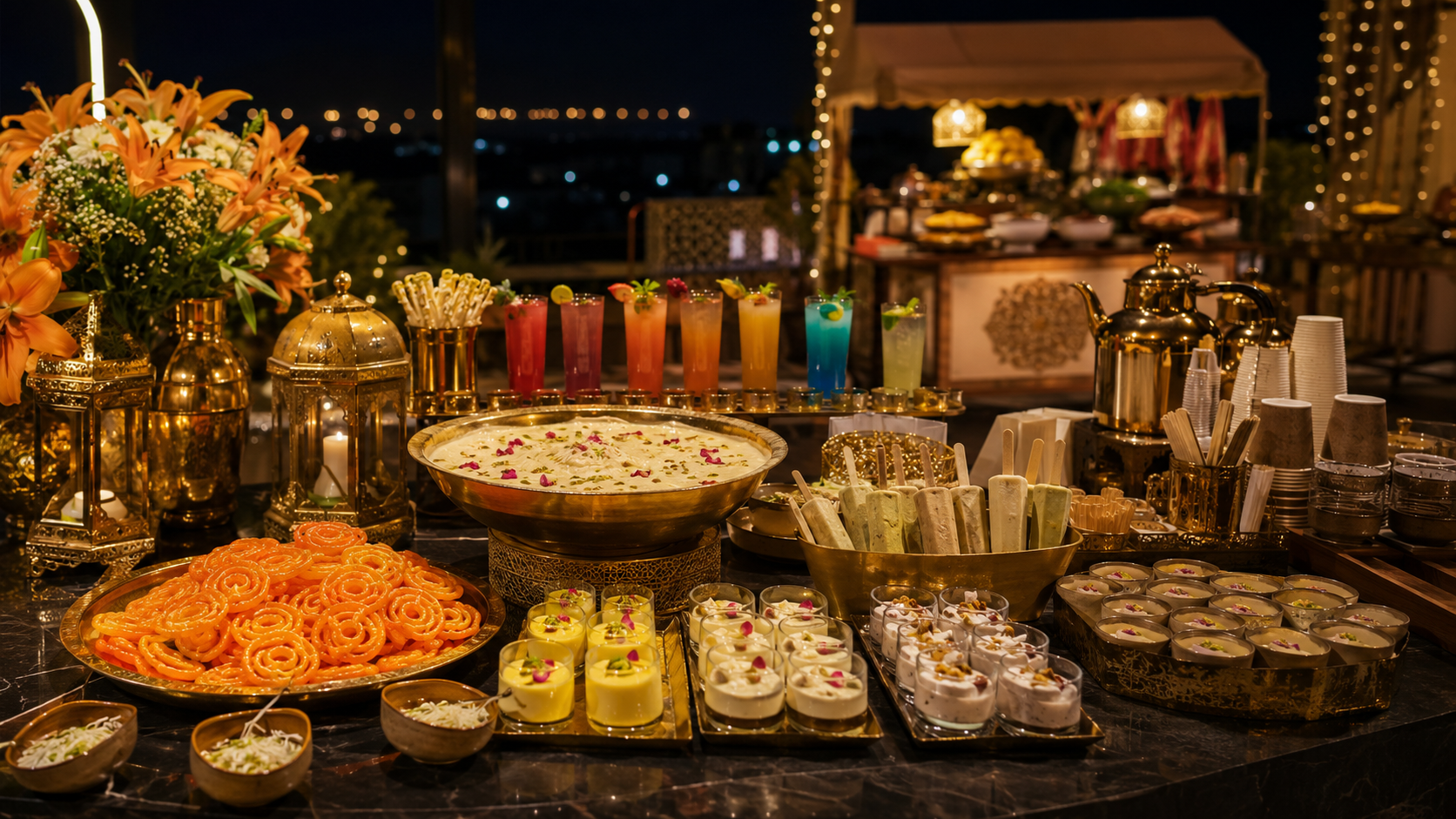
For a balanced dessert menu, choose one hot Indian sweet, one chilled dessert and one interactive option. For example, jalebi-rabri, rasmalai and live ice cream offer different temperatures, textures and presentation styles.
How to Plan the Menu According to Sangeet Timing
| Event Timing | Recommended Food Plan | Important Addition |
|---|---|---|
| Afternoon Sangeet | Light starters, chaat, lunch and cold beverages | Fresh juices and fruit-based desserts |
| Early evening | Welcome drinks, starters, live counters and dinner | Tea and coffee station |
| Late evening | Extended starters followed by a compact dinner | Late-night snacks and hot beverages |
| Winter Sangeet | Grilled starters, rich curries and hot desserts | Soup, chai and coffee |
| Summer Sangeet | Light starters, mild curries and refreshing desserts | Mocktails, chilled water and coolers |
How Much Food Should You Arrange?
Food quantity depends on the number of adults and children, event duration, number of counters and whether another function is being held on the same day. Avoid ordering equal quantities of every dish because guests generally consume starters, breads, rice and desserts in different proportions.
For detailed quantity planning, read our guide on food quantity for 50 guests . Your caterer should also keep a reasonable buffer for unexpected guests while avoiding excessive food waste.
Important Catering Tips for a Smooth Sangeet
- Open starters before performances begin: Guests should receive drinks and appetisers shortly after arrival.
- Use tray service: Circulating service allows guests near the dance floor and stage to enjoy starters without creating queues.
- Place counters strategically: Do not position every counter in one corner. Divide popular stations across the venue.
- Label dishes clearly: Mention vegetarian, non-vegetarian, Jain and spicy dishes on clean display cards.
- Plan separate Jain food: Prepare and serve it separately according to the family’s requirements.
- Keep the buffet open sufficiently long: Family members performing on stage may eat later than other guests.
- Arrange sufficient service staff: The quality of service matters as much as the number of dishes.
- Conduct a tasting: Finalise spice levels, presentation and portion size before the event.
If you are planning multiple wedding functions, you can also explore our engagement ceremony food menu , wedding starters menu and wedding reception food menu . Planning the functions together helps prevent repeated dishes across the wedding.
Mistakes to Avoid While Finalising a Sangeet Menu
- Adding too many fried dishes with similar flavours
- Choosing more live counters than the venue can manage
- Ignoring senior guests and children
- Serving the main course too late
- Keeping drinks only near the main buffet
- Repeating paneer in several starters and curries
- Not separating vegetarian and non-vegetarian service
- Underestimating water and beverage requirements
- Finalising dishes without a tasting session
- Selecting dishes only for appearance instead of taste and service practicality
Why Choose Blurry Curry for Sangeet Catering?
Blurry Curry Catering can help create a customised Sangeet menu according to your guest count, venue, preferred cuisine and budget. Instead of using the same menu for every celebration, the food selection can be planned around your event timing, family preferences and service requirements.
From circulating starters and live counters to the main buffet, mocktails and desserts, each part of the service should work together. Early planning also makes it easier to arrange Jain food, regional dishes, separate non-vegetarian counters and special options for children or senior guests.
Frequently Asked Questions
What food should be included in a Sangeet ceremony?
A Sangeet food menu should include welcome drinks, vegetarian and non-vegetarian starters, live food counters, a balanced Indian main course, breads, rice, salads and desserts. Late-night snacks can be added when the celebration continues beyond midnight.
How many starters are enough for a Sangeet?
For a medium-sized function, four to six vegetarian starters and two to three non-vegetarian starters are generally sufficient. The final number should depend on guest count, budget and the number of live counters.
Which live counters are best for a Sangeet?
Chaat, pasta, pizza, kebab, Asian stir-fry and dosa counters are popular choices. Select three to five counters that suit the age group and preferences of your guests.
What is a good vegetarian Sangeet menu?
A good vegetarian menu can include paneer tikka, dahi kebab, crispy corn, chaat, pasta, paneer lababdar, seasonal vegetables, dal makhani, veg biryani, Indian breads and two or three desserts.
Should dinner be served before or after Sangeet performances?
Starters and drinks should begin before the performances. The main buffet can open during the middle of the programme so senior guests and families can dine without waiting for every performance to finish.
How can we reduce food waste at a Sangeet?
Confirm the expected guest count, avoid excessive menu varieties, calculate different quantities for different dishes and keep a controlled buffer. An experienced caterer can adjust production according to the menu and service format.
Can Jain food be arranged separately?
Yes. Jain dishes should be planned in advance and prepared using separate ingredients and utensils. The counter should also be labelled and managed separately to prevent mixing.
How early should we book Sangeet catering?
Booking four to eight weeks before the event is advisable. For peak wedding dates or large celebrations, contact the caterer earlier to secure availability and complete menu tasting in time.