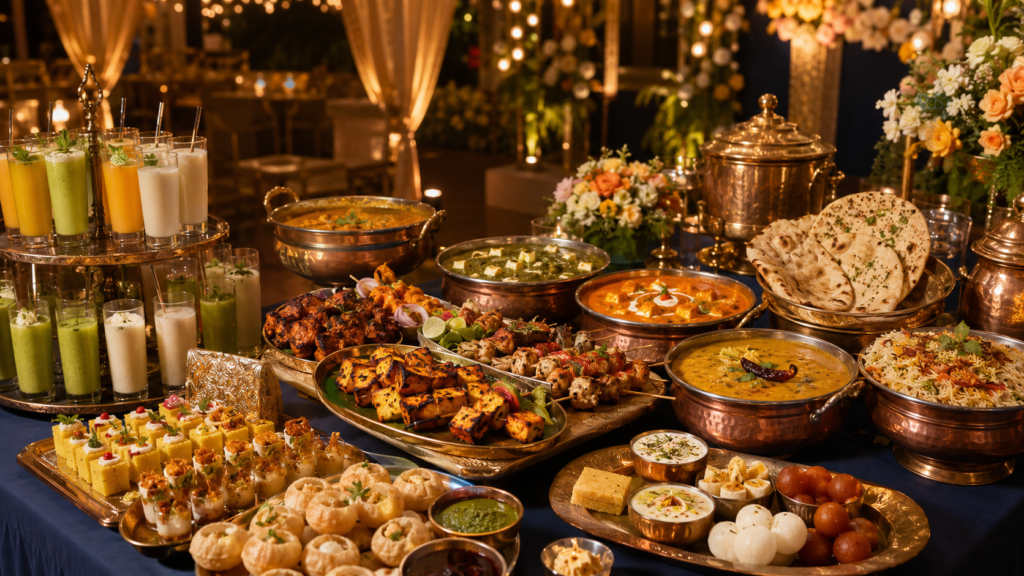
An Indian wedding dinner is more than a long display of dishes. It is the part of the celebration where regional traditions, family preferences, presentation and hospitality come together. The best Indian wedding dinner menu offers enough variety for different guests while keeping every counter fresh, easy to navigate and practical to serve.
This guide contains more than 100 vegetarian and non-vegetarian food ideas, live-counter combinations and ready-made menus for budget, traditional and premium celebrations. Use it to shortlist dishes, then adjust the final selection according to the season, venue, guest count, dietary requirements and available kitchen facilities.
Quick answer: A balanced Indian wedding dinner menu can include 2–3 welcome drinks, 4–6 starters, 2–4 live counters, 3–5 vegetarian mains, 1–3 non-vegetarian mains when required, one dal, 1–2 rice dishes, 3–4 breads, accompaniments and 3–4 desserts. Select contrasting flavours and cooking styles instead of repeating paneer, cream, potato or fried food in every course.
How to Plan an Indian Wedding Dinner Menu
Begin with the event format rather than the number of dishes. A traditional wedding dinner, cocktail reception, destination wedding and intimate family function all need different service plans. Confirm the following details before asking the caterer for a final quotation.
Build the menu course by course. First select one or two signature experiences—perhaps a regional main course, a live tandoor or a fresh dessert counter. Add supporting dishes that contrast with those signatures. For example, if the starters are rich and grilled, keep one main-course vegetable lighter and avoid filling the live-counter section with more tandoori food.
Indian Wedding Welcome Drinks
Evening drinks should refresh guests without making them full before dinner. Two familiar options and one seasonal or signature beverage are sufficient for most weddings.
Planning tip: Choose chilled dairy drinks only when dependable refrigeration and frequent small-batch replenishment are available. For an outdoor summer wedding, keep drinking water and one low-sugar cooler available at more than one location.
Vegetarian and Non-Vegetarian Wedding Starters
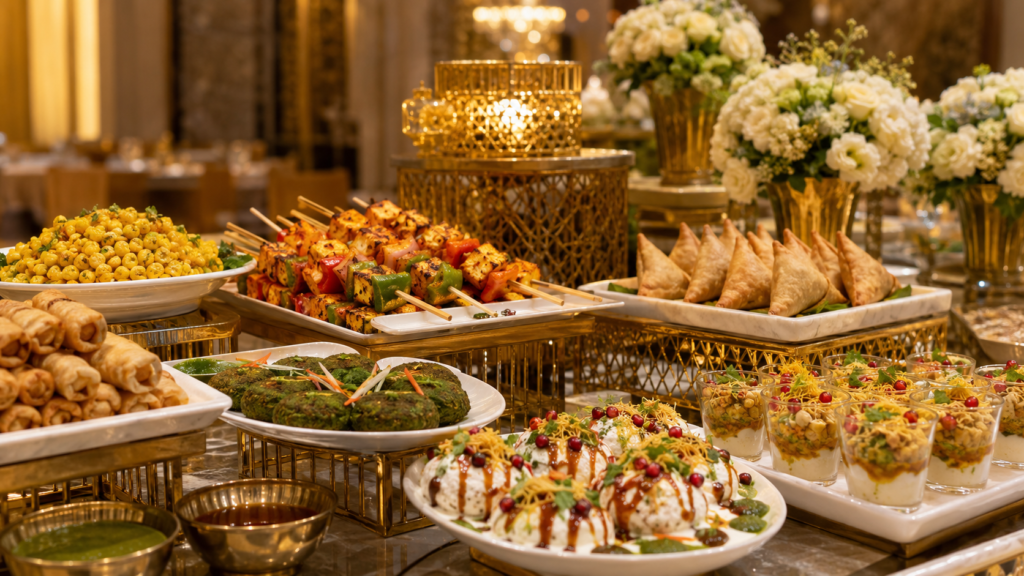
Four to six starters are enough for many Indian wedding dinners. Mix grilled, crisp, steamed and softer items so the selection does not feel repetitive. Families wanting a larger list can explore our dedicated wedding starters menu.
Vegetarian Starter Ideas
- Paneer tikka
- Achari paneer tikka
- Paneer malai tikka
- Dahi kebab
- Hara bhara kebab
- Vegetable seekh kebab
- Tandoori mushroom
- Stuffed mushroom
- Crispy corn
- Palak patta chaat bites
- Mini raj kachori
- Cheese and corn cigar
- Vegetable spring roll
- Lotus-stem chips
- Raw banana cutlet
- Mini idli with podi
- Vegetable paniyaram
- Khandvi rolls
- Lilva kachori
- Beetroot and peanut tikki
Non-Vegetarian Starter Ideas
- Chicken tikka
- Chicken malai tikka
- Chicken reshmi kebab
- Tandoori chicken bites
- Chicken seekh kebab
- Mutton seekh kebab
- Amritsari fish
- Fish fingers with dip
- Fish tikka
- Chicken 65
- Chicken pepper fry
- Mutton sukka bites
- Prawn pepper fry
- Tandoori prawns
- Mini chicken kathi rolls
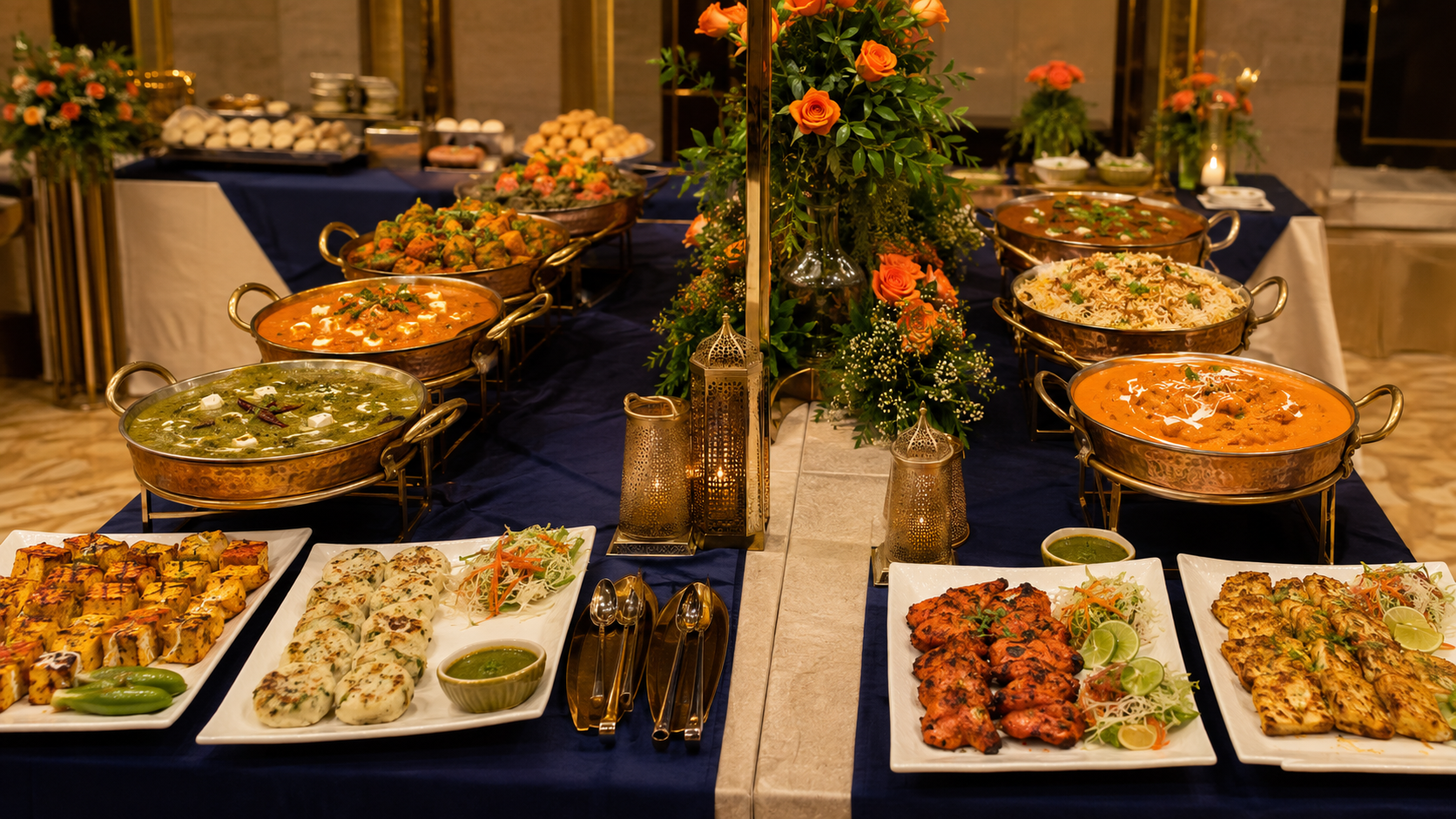
Best Live Food Counters for an Indian Wedding Dinner
Live counters add freshness and guest interaction, but each one requires equipment, staff and enough space to serve quickly. Select counters that complement the buffet instead of repeating the same flavours. Our detailed guide to live food counters for weddings includes additional combinations and planning advice.
- Gol gappa and flavoured-water counter
- Papdi chaat and dahi bhalla station
- Aloo tikki chaat counter
- Palak patta chaat counter
- Live tandoor for paneer, mushroom and kebabs
- Dosa and uttapam counter
- Appam with vegetable or chicken stew
- Fresh roomali roti with kebabs
- Mini kulcha and chole station
- Kathi roll counter
- Asian wok with noodles and vegetables
- Pasta counter with selected sauces
- Regional counter such as litti chokha or dal baati
- Live jalebi with rabri
- Kulfi and falooda station
- Tea, coffee and post-dinner beverage station
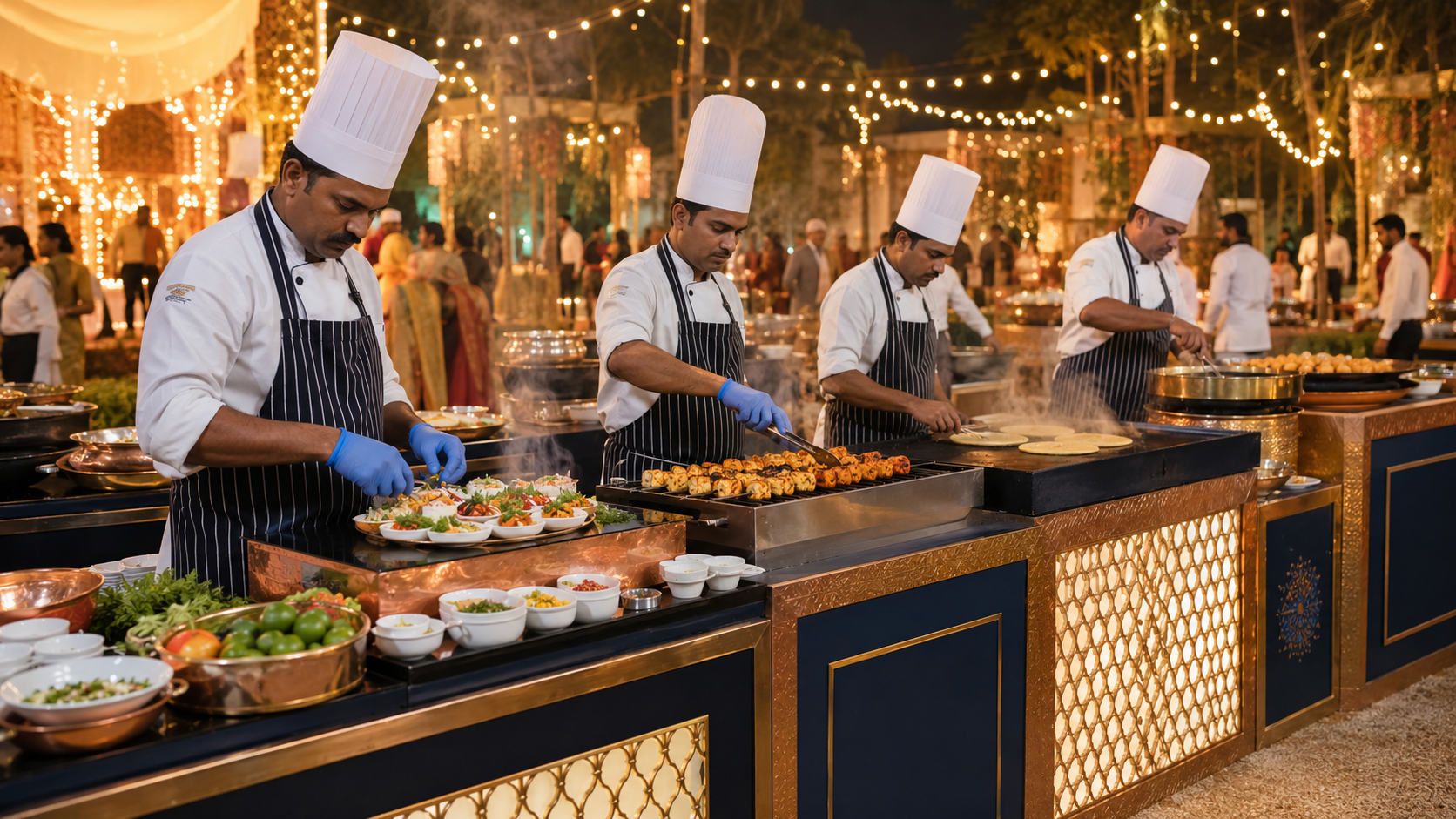
Counter rule: Two or three efficiently operated counters usually create a better experience than six slow stations. For a large guest count, duplicate the fastest-moving counter rather than adding another unrelated cuisine.
Indian Wedding Dinner Main-Course Menu
The main course should offer clear choices without several similar gravies. A practical buffet can include two paneer or kofta options only when their sauces and textures are genuinely different. Add one seasonal vegetable, one dal and well-selected non-vegetarian preparations where required. See our complete wedding main-course menu for more dish combinations.
Vegetarian Main-Course Dishes
- Paneer lababdar
- Shahi paneer
- Kadai paneer
- Palak paneer
- Paneer butter masala
- Malai kofta
- Navratan korma
- Subz miloni
- Seasonal mixed vegetables
- Bhindi do pyaza
- Gatte ki sabzi
- Dum aloo Kashmiri
- Chole masala
- Vegetable jalfrezi
- Undhiyu in winter
- Avial
- Dal makhani
- Dal tadka
- Gujarati dal and kadhi
- Rajma masala
Non-Vegetarian Main-Course Dishes
- Butter chicken
- Chicken lababdar
- Kadai chicken
- Chicken korma
- Chicken changezi
- Mutton rogan josh
- Mutton korma
- Laal maas
- Kosha mangsho
- Fish curry
- Goan fish curry
- Chicken stew with appam
- Malabar chicken curry
- Prawn curry
- Nihari for a suitable traditional menu
Rice, Biryani and Indian Breads
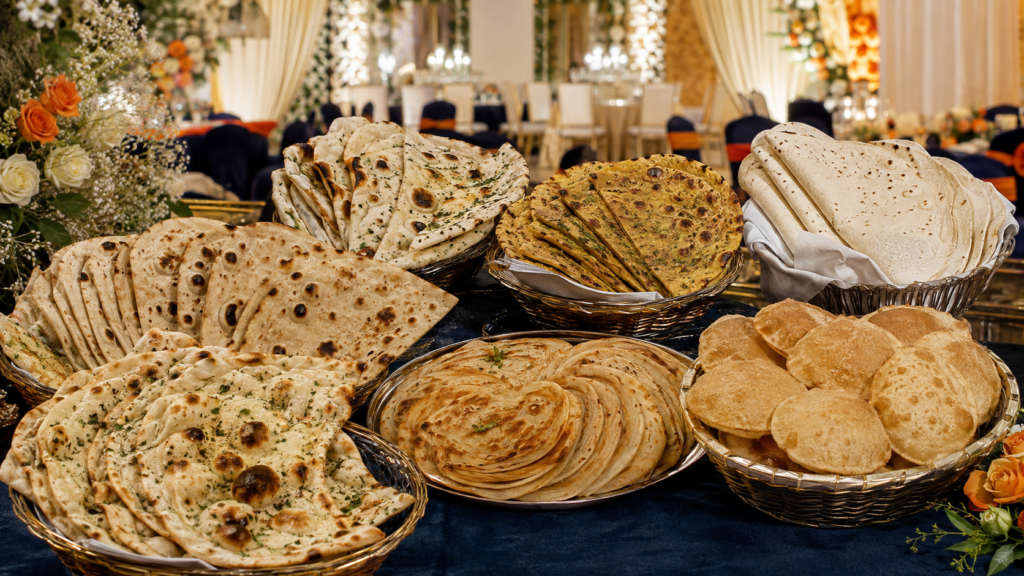
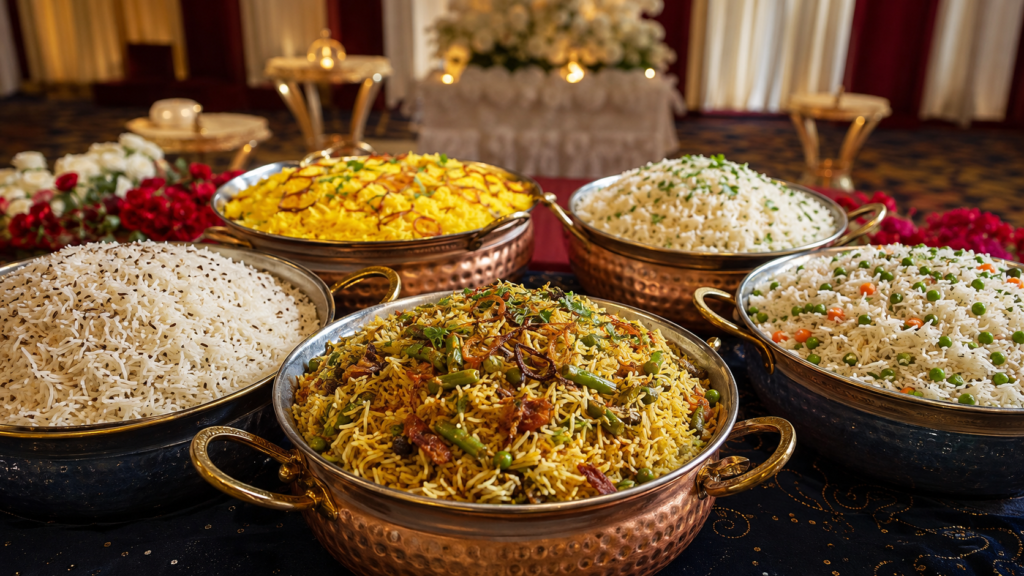
One plain or lightly flavoured rice and one celebratory rice dish are normally enough. Similarly, three or four breads provide variety without slowing the service. The bread counter must be staffed to keep small batches hot.
| Category | Recommended choices | Best pairing |
|---|---|---|
| Light rice | Steamed basmati rice, jeera rice, peas pulao | Dal, kadhi and vegetable gravies |
| Vegetarian celebration rice | Vegetable dum biryani, subz pulao, basanti pulao | Raita and a lighter curry |
| Non-vegetarian biryani | Chicken biryani, mutton biryani, yakhni pulao | Raita, salan and salad |
| Tandoori breads | Butter naan, garlic naan, tandoori roti | Paneer, chicken and dal makhani |
| Layered and regional breads | Lachha paratha, missi roti, roomali roti, appam | Kebabs, regional curries and stews |
Essential Accompaniments
- Boondi, cucumber or mixed-vegetable raita
- Green salad and kachumber
- Mint chutney and tamarind chutney
- Pickle and papad
- Biryani salan where appropriate
- Fresh lemon, sliced onion and green chilli served separately
Indian Wedding Dinner Desserts
Choose desserts with different temperatures and textures: one warm sweet, one chilled milk-based option and one live or frozen preparation. This gives guests variety without filling the counter with similar mithai.
- Gulab jamun
- Jalebi with rabri
- Moong dal halwa
- Gajar halwa in winter
- Malpua with rabri
- Rasmalai
- Phirni
- Kesar kulfi
- Kulfi falooda
- Mishti doi
- Sandesh
- Shrikhand
- Payasam
- Motichoor laddoo
- Kaju katli
- Seasonal fruit cream
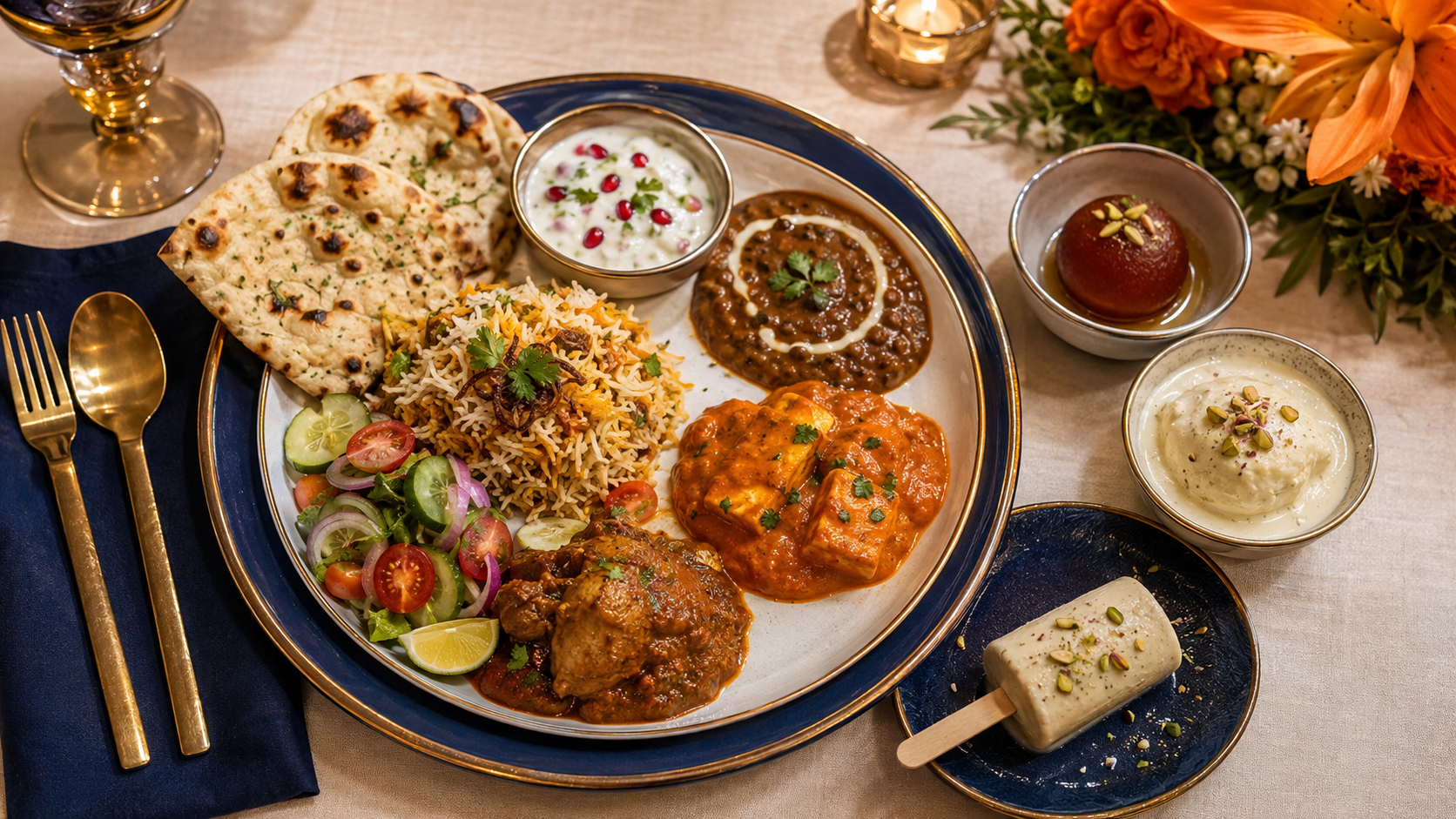
Ready-Made Indian Wedding Dinner Menus
Jain requirements differ between families. Confirm restricted ingredients, preparation surfaces, oil, utensils and service equipment in writing. Our Jain wedding menu guide explains suitable combinations in more detail.
Quantity and Service Planning
Do not calculate a full serving of every item for every guest. People divide their appetite across starters, live counters, the buffet and desserts. The correct quantity depends on the menu size, service duration, weather, guest profile and whether the event begins on time.
| Menu section | Practical starting point | Operational note |
|---|---|---|
| Welcome drinks | 2–3 choices | Keep water and one light option widely available. |
| Passed starters | 4–6 varieties | Estimate combined portions instead of a full portion of every item per guest. |
| Live counters | 2–4 counters | Check portions per hour and duplicate popular stations for large events. |
| Main course | 4–8 primary dishes | Calculate vegetarian and non-vegetarian demand separately. |
| Rice and breads | 1–2 rice dishes and 3–4 breads | Prepare breads and biryani in controlled batches. |
| Desserts | 3–4 contrasting options | Hot and chilled desserts need separate holding plans. |
Use smaller buffet vessels with frequent replenishment instead of displaying the complete quantity at once. This keeps food warmer, improves presentation and reduces exposure. Keep vegetarian, non-vegetarian, Jain and allergy-sensitive food clearly separated from preparation through service.
Common Wedding Dinner Menu Mistakes
- Adding too many dishes only to make the menu look expensive
- Repeating paneer in several starters, counters and main-course gravies
- Serving multiple fried starters without a grilled or lighter choice
- Opening several counters without enough chefs or equipment
- Placing all popular counters in one congested area
- Not separating vegetarian and non-vegetarian serving utensils
- Ignoring mild options for children and senior guests
- Selecting seasonal dishes when ingredients are not at their best
- Keeping naan, kebabs or fried food in large batches for too long
- Choosing several rich desserts with the same texture and temperature
- Finalising the dish list before checking venue power, water and ventilation
- Not confirming Jain, allergy and dietary instructions in writing
Final Wedding Dinner Planning Checklist
A successful Indian wedding dinner menu is not the longest possible food list. It is a carefully edited selection that suits the family, serves smoothly and tastes fresh throughout the event. Prioritise dependable preparation, contrasting dishes and professional service; guests will remember quality and hospitality more than the total number of counters.
Frequently Asked Questions
What should be included in an Indian wedding dinner menu?
A balanced menu can include welcome drinks, vegetarian and optional non-vegetarian starters, selected live counters, vegetable and meat curries, dal, rice, biryani, Indian breads, accompaniments and contrasting desserts.
How many dishes are enough for a wedding dinner?
There is no fixed number, but 2–3 drinks, 4–6 starters, 2–4 counters, 4–8 main-course dishes, 1–2 rice choices, 3–4 breads and 3–4 desserts create sufficient variety for many weddings.
What is a good vegetarian wedding dinner menu?
A practical vegetarian menu can include mint lemonade, paneer tikka, dahi kebab, chaat, paneer lababdar, seasonal vegetables, dal makhani, vegetable biryani, naan, raita, jalebi-rabri and kulfi.
Which non-vegetarian dishes are popular at Indian weddings?
Chicken tikka, fish tikka, mutton seekh kebab, butter chicken, chicken korma, mutton rogan josh and chicken or mutton biryani are popular options.
How many live counters should a wedding have?
Two to four well-managed counters are enough for many weddings. The right number depends on guest count, service speed, venue space, equipment and the rest of the menu.
Which live counters are best for an Indian wedding dinner?
Chaat, tandoor, dosa, Asian wok, regional food and live jalebi-rabri counters work well. Choose contrasting counters and ensure each station can serve guests quickly.
How can vegetarian and non-vegetarian food be kept separate?
Use separate preparation zones, equipment, serving vessels and utensils. Place the buffet sections apart and clearly identify them so utensils are not accidentally exchanged.
What desserts are best for a wedding dinner?
Combine different temperatures and textures, such as warm gulab jamun or jalebi, chilled rasmalai or phirni and kulfi or ice cream. Three or four contrasting options are generally sufficient.
How can food waste be reduced at a large wedding?
Confirm attendance, estimate combined demand across all counters, prepare in controlled batches, use smaller buffet vessels, replenish regularly and avoid offering several dishes with nearly identical flavours.
How early should wedding catering be booked?
Booking six to twelve weeks in advance is advisable for many weddings. Peak dates, destination venues, large guest counts and specialised regional menus may require earlier confirmation.